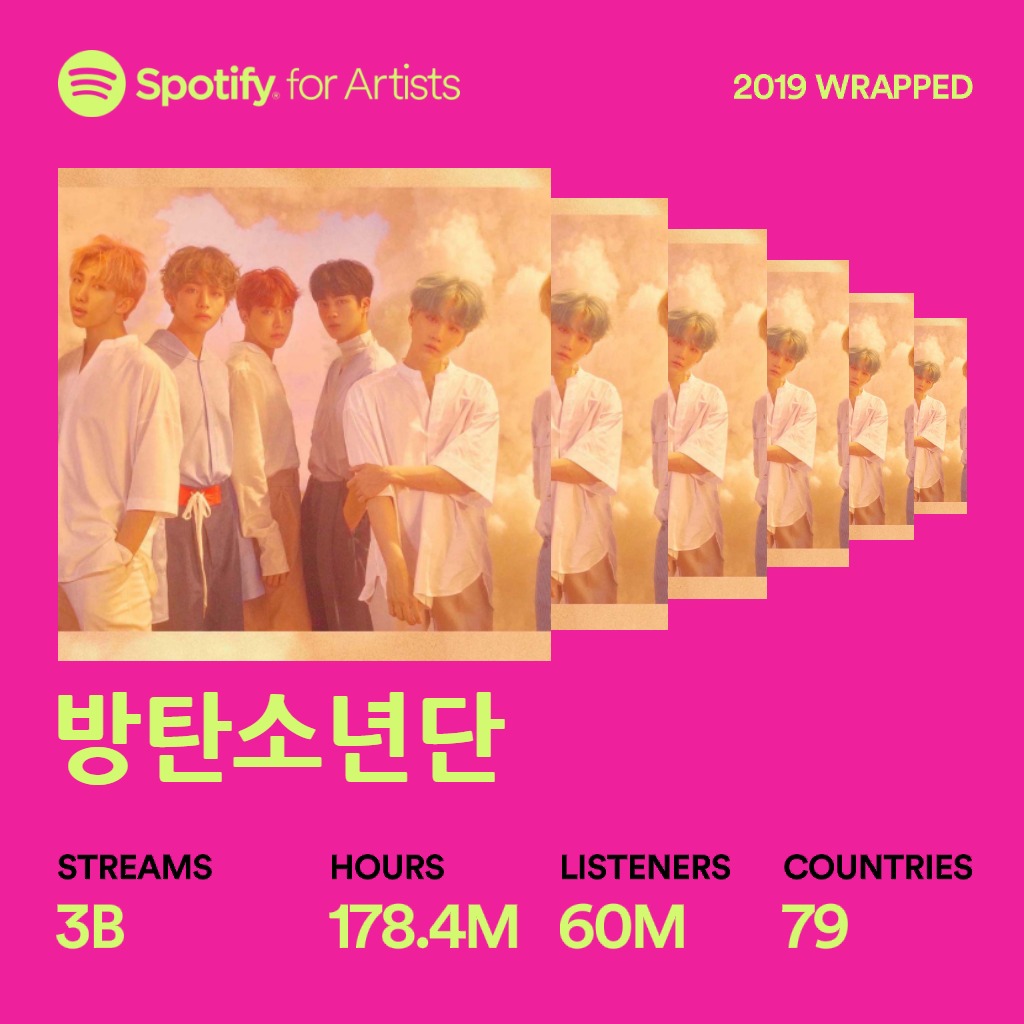
BTS Hits Streaming Milestone on Spotify in 2019: A Global Wave of Fans and Soundtracks
In 2019, BTS achieved a historic milestone on Spotify, surpassing 3 billion streams worldwide and cementing the group’s status as a global music powerhouse. The multi-member K-pop act, known for its high-energy performances and meticulously crafted visuals, reached 178.4 million hours of listening time from 60 million unique listeners across 79 countries, a figure that underscored both sustained momentum and a widening international footprint for South Korean pop music. This achievement sits at the intersection of digital streaming’s rapid evolution and the expanding appetite for non-English language popular music, marking a watershed moment in the Asia-to-global music pipeline.
Historical context: the rise of BTS and the streaming era BTS’s ascent began in earnest in the mid-2010s, when their self-produced blend of pop, hip-hop, EDM-inflected tracks, and socially conscious lyrics resonated with younger audiences around the world. The year 2019 stood out as a fulcrum, when BTS’s presence crossed from a devoted but regional fan base into a truly global phenomenon. Streaming platforms, including Spotify, played a central role in that expansion by providing a scalable, accessible way for fans to discover, curate, and share music across borders. The group’s fan base—collectively known as ARMY—leveraged social media, live performances, and synchronized global campaigns to maximize streaming engagement, turning singles and albums into week-by-week streaming events. The milestone can be read as both a reflection of BTS’s creative output and the broader shift toward streaming-first consumption in the music industry.
Economic impact: new revenue models and cross-border collaboration From an industry perspective, BTS’s 2019 streaming milestone highlighted the economic viability of global, digitally-native fame. Streaming revenue structures, while uneven across territories, rewarded prolific output and consistent fan engagement, enabling artists to monetize music beyond traditional album cycles. For BTS, the streaming numbers translated into multiple revenue streams: digital sales, licensing for film and television, brand partnerships, and live performances that often leveraged international markets. The data point emphasizes the rising importance of non-Western markets in global music economics, with Asia, Europe, and the Americas collectively driving the majority of streams. This pattern contributed to a broader trend in 2019: streaming became a primary engine for growth and discovery, enabling acts from diverse linguistic backgrounds to compete on a level playing field with English-language artists.
Regional comparisons: how BTS’s 2019 performance compared globally BTS’s reach across 79 countries in 2019 demonstrates a level of geographic penetration that few non-English acts achieved at scale during this period. In comparison, Western pop and rap acts continued to dominate streaming leaderboards in traditional markets such as the United States and parts of Europe, but BTS’s metrics indicate a shifting balance toward global, multi-market appeal. The nearly 178 million hours of listening time from 60 million listeners in 2019 also highlight the group’s ability to sustain engagement across diverse cultural contexts, a feat that many music regionalizers aimed for but few achieved with such consistency. The year also underlined the role of global fan communities in sustaining streaming momentum, a dynamic that would shape marketing and release strategies for years to come.
Cultural resonance: language, identity, and the universality of pop BTS’s 2019 streaming milestone invites reflection on how music transcends language barriers in the streaming era. While Korean-language tracks formed the core of much of BTS’s catalog, the group’s music frequently fused universal themes—aspirations, self-worth, and resilience—with cinematic production, choreographic complexity, and narrative-driven music videos. These elements contributed to a sense of shared experience among fans regardless of language, illustrating how modern pop can function as a global lingua franca when supported by compelling artistry and transnational fan networks. The 3-billion-stream milestone is thus as much a cultural milestone as an economic one, signaling a broader acceptance and consumption of non-English music across global playlists and discovery algorithms.
Public reaction: fan enthusiasm, media coverage, and industry recognition Public response to BTS’s 2019 streaming milestone was characterized by celebratory fan-driven campaigns, editorial coverage highlighting the group’s cross-cultural appeal, and industry recognition of a new era in global pop music. Reports on streaming milestones often emphasized not just the numbers, but the narrative behind them—the meticulous fandom organization, the strategic release cadence, and the group’s willingness to engage with fans through social media and live events. This public sentiment mirrored a growing mainstream acknowledgment that K-pop and other non-English genres were no longer niche or regional but integral to the global music ecosystem. Such reactions helped shape investor confidence, sponsorship opportunities, and partnership discussions across entertainment, technology, and consumer brands.
Sustainability and long-term implications: what this milestone signaled for the industry The 2019 milestone underscored several enduring implications for the music industry. First, it reinforced streaming as the primary medium for music discovery and monetization, reinforcing the need for artists to build durable, multi-channel engagement strategies beyond traditional radio and physical sales. Second, it highlighted the importance of consistent output and international touring as complementary drivers of streaming growth, with staggered releases keeping audiences engaged across continents. Third, it signaled a shift in the competitive landscape, where artists from outside the traditional Western markets could achieve sustained, high-volume global listenership through targeted marketing, cultural resonance, and community-building, prompting record labels and platforms to invest more in international talent pipelines and localized promotion strategies.
Historical parallels: looking back at industry inflection points The BTS milestone can be viewed alongside earlier market inflection points in the music industry, such as the rise of music videos as promotional engines, the expansion of digital distribution in the late 2000s, and the emergence of streaming platforms as dominant distribution channels in the 2010s. Each wave reshaped how audiences experience music and how revenue is generated, with 2019 representing a moment when streaming, global fan mobilization, and non-English content converged to redefine what success looks like for a global pop act. Analysts note that these patterns foreshadow continued diversification in the music marketplace, with more artists achieving sizable international footprints through digital ecosystems that support cross-border listening and engagement.
Public policy and infrastructure considerations: regional markets and digital access The expansion of streaming globally in 2019 occurred within a broader context of increasing digital accessibility and evolving regulatory frameworks around music licensing, data privacy, and telecom infrastructure. Regions that improved internet access and mobile adoption often experienced faster growth in streaming consumption, which in turn reinforced the value of content partnerships, broader language variety in catalog offerings, and more aggressive localization strategies by streaming platforms. These infrastructural and policy developments contributed to the feasibility of multinational acts like BTS sustaining high streaming volumes across diverse markets, illustrating how policy and technology intersect to shape cultural industries.
Looking ahead: lessons for artists and platforms For artists pursuing global impact, BTS’s 2019 streaming milestone offers several lessons. Invest in a globally coherent brand narrative that translates across languages and cultures. Leverage fan communities as an asset for organic promotion and sustained listening sessions. Prioritize data-driven release planning to maximize discovery windows and playlist placements. For platforms, the lesson lies in building diverse catalogs, improving multilingual discovery pathways, and supporting creators with tools that enhance cross-border visibility and monetization. The 3-billion-stream milestone serves as a benchmark for what is possible when artistry, audience engagement, and digital distribution align at scale.
Conclusion: a year that reshaped the music landscape In 2019, BTS’s achievement on Spotify symbolized more than a numerical milestone; it signified a shift in how global audiences discover, share, and celebrate music across borders. The combination of deep fan engagement, strategic release cadence, and the global reach of streaming platforms created a template for international success that many artists would attempt to emulate in the following years. As the music industry continued to navigate the evolving economics of streaming, BTS’s 2019 performance remained a touchstone for global pop’s potential to transcend linguistic and cultural boundaries, leaving an enduring imprint on the soundscape of the 21st century. The momentum generated by this milestone would influence playlist curation, touring strategies, and cross-cultural collaborations for years to come.