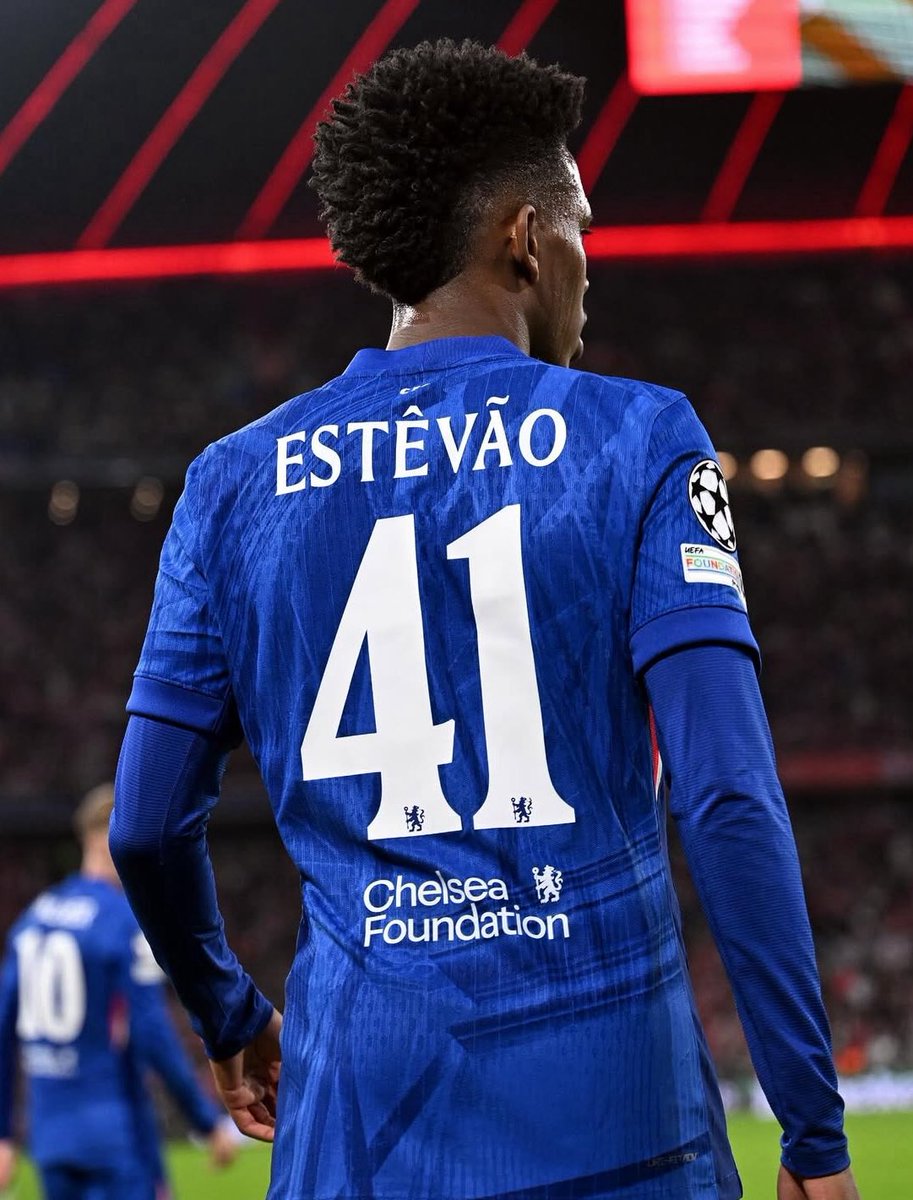
Chelsea’s Estevão Willian Makes Champions League Debut Against Bayern Munich
In a pivotal night at the Allianz Arena, 18-year-old Brazilian forward Estevão Willian stepped onto European football’s biggest stage, making his Champions League debut for Chelsea in their high-profile clash against Bayern Munich. Wearing the number 41 shirt, the teenager’s introduction marked more than just playing minutes—it symbolized the beginning of Chelsea’s long-term bet on one of Brazil’s most promising young players.
A Landmark Night for Estevão Willian
Estevão entered the pitch in the second half, with Chelsea looking to make a statement against one of Europe’s perennial powerhouses. His cameo did not go unnoticed; fans applauded his direct running, quick decision-making, and evident confidence despite the high-pressure atmosphere of a knockout-level European fixture.
Though the match ended with Bayern showing their experience and tactical organization, the spotlight was on Chelsea’s youthful debutant whose permanent move from Palmeiras is set to be finalized next summer. This first Champions League appearance provides both the player and the club a clear look into the long-term vision Chelsea have pursued aggressively in recent transfer markets: building a foundation of talented, high-upside youth who can grow into world-class performers.
Chelsea’s Bold Transfer Strategy
In recent years, Chelsea have focused heavily on securing promising players before they reach the heights of superstardom. Estevão Willian, hailed in Brazil as one of the brightest talents of his generation, fits neatly into that project. His transfer from Palmeiras mirrors similar moves across the club’s strategy—investing heavily in South America where the next wave of elite footballers is emerging.
The winger had already built a reputation in Brazil’s Série A for incisive attacking play, technical flair, and developed maturity in decision-making unusual for his age. Chelsea secured him early, anticipating competition from other European giants, ensuring his future would be tied to Stamford Bridge.
This long-term planning recalls a similar move nearly two decades ago when Arsenal moved early for Cesc Fàbregas or, more recently, when Real Madrid tied down Vinícius Júnior from Flamengo at just 16. For Chelsea, introducing Estevão to Champions League football at 18 signals their commitment to not just signing prospects, but empowering them to contribute immediately.
The Significance of the Allianz Arena Debut
The magnitude of debuting against Bayern Munich in Germany adds weight to Estevão’s story. Bayern, with a record of overwhelming dominance at home and regular deep runs in the Champions League, provided one of the most difficult environments a young player could face.
For Estevão, the chance to witness firsthand the pace, physicality, and precision of European knockout football offers invaluable exposure that will accelerate his adaptation into Chelsea’s system. The Allianz Arena, roaring with nearly 75,000 fans, provided an unforgiving backdrop but also forged a defining first chapter in his career.
Brazilian Stars Lighting Up Europe
Estevão’s progression continues Brazil’s proud tradition of sending dazzling talents to Europe’s elite clubs. Over the decades, South America’s largest football nation has produced iconic players who made immediate impacts in European competitions—from Ronaldinho and Kaká to Neymar and, more recently, Vinícius Júnior and Rodrygo at Real Madrid.
Brazilian attackers are known for combining technical brilliance with fearless creativity, qualities Estevão has consistently displayed. Comparisons within Brazil have already labeled him as one of the most exciting prospects since Vinícius. While such labels bring pressure, they also highlight just how highly rated Estevão is within the global scouting community.
Historical Comparisons: Chelsea’s Youth on the European Stage
Chelsea are no strangers to fielding young talents in the Champions League. Over the years, several players have made highly anticipated debuts in similar circumstances. John Terry, for instance, emerged through the club’s ranks and grew into an icon, while more recent academy graduates like Mason Mount transitioned quickly from academy products to European competition stalwarts.
The introduction of Estevão, however, is representative of a new era. Unlike Mount or Terry, he is not a Cobham academy graduate but rather a global acquisition—evidence of Chelsea’s modern strategy of blending homegrown education with international scouting networks to build a diverse, youthful squad.
Economic Dimensions of Estevão’s Transfer
The business aspect of Estevão’s move is significant. His transfer is expected to place him among the most expensive teenagers in football history, with Chelsea paying a premium to Palmeiras for exclusive rights.
Such investments highlight how inflated the market has become for emerging talents. European clubs no longer wait for stars to mature; instead, they pay hefty sums for potential. Chelsea’s decision reflects both a willingness to gamble financially and their belief that future resale value or long-term contribution justifies the immediate outlay.
Historically, clubs like Real Madrid, Barcelona, and Manchester United have engaged in similar transfer philosophies, securing raw but elite-level prospects early. In Chelsea’s case, this represents not just market participation but a revival of ambition, positioning themselves as a destination for the world’s brightest youth talents amid fierce competition from rival European giants.
Regional Comparisons: England Versus Europe
Compared to rivals in England, Chelsea’s strategy appears bolder. Manchester City continues to lean on established stars supplemented by carefully integrated youth, while Liverpool focus heavily on system fit and gradual progression from their academy.
On the continent, Real Madrid and Barcelona maintain their dominance in snapping up South American talent young. Estevão’s path resembles that of Vinícius Júnior and Rodrygo rather than English academy graduates, underlining how Chelsea are aligning themselves with strategies employed by Spain’s most successful clubs.
Still, there is risk. Some South American wonderkids struggle to adapt to the physical and tactical rigor of European leagues. Chelsea will need patience, a coherent development plan, and stability within their coaching staff to ensure Estevão’s talent translates on the pitch.
Reaction From Fans and Experts
Chelsea fans reacted with anticipation and excitement when Estevão stepped onto the pitch. Social media exploded with clips of his touches and runs, fans celebrating what they believe could be the beginning of a new era.
Analysts also noted the composure he displayed, particularly in a match environment dominated by Bayern’s pressure. While he did not produce a goal or assist in his short debut minutes, the promise of his movement and technical ability stood out.
Former professionals have cautioned against overhyping a teenager so early, yet the sentiment around Estevão’s first taste of Champions League football remains overwhelmingly positive.
Looking Ahead: Estevão’s Role at Chelsea
With his permanent move to Chelsea still a season away, this debut foreshadows the adjustments and preparation needed for him to thrive in the Premier League. The Champions League appearance provided him a chance to acclimatize with future teammates, fans, and the tactical demands of European football.
Managerial decisions will be critical. If Chelsea’s coaching staff succeeds in carving out a development pathway with gradual responsibility, Estevão could be primed for a starring role in seasons to come. Early exposure against top-tier opposition like Bayern Munich will only accelerate his footballing education.
Conclusion: A Night to Remember
The introduction of Estevão Willian against Bayern Munich stands as a landmark for both player and club. For Chelsea, it reinforced their transfer philosophy and their faith in youth development on a global scale. For Brazil, it offered a new name to watch eagerly as he begins his European ascent.
Though his debut was brief, the symbolism of stepping onto Champions League turf as a teenager cannot be understated. It marks the beginning of what could become a defining career—one that Chelsea, Palmeiras, and Brazilian football followers will track with intense interest.
For Chelsea supporters, the hope is simple: Estevão’s first steps in Munich will be remembered as the starting point of a new star destined to shape the club’s future.