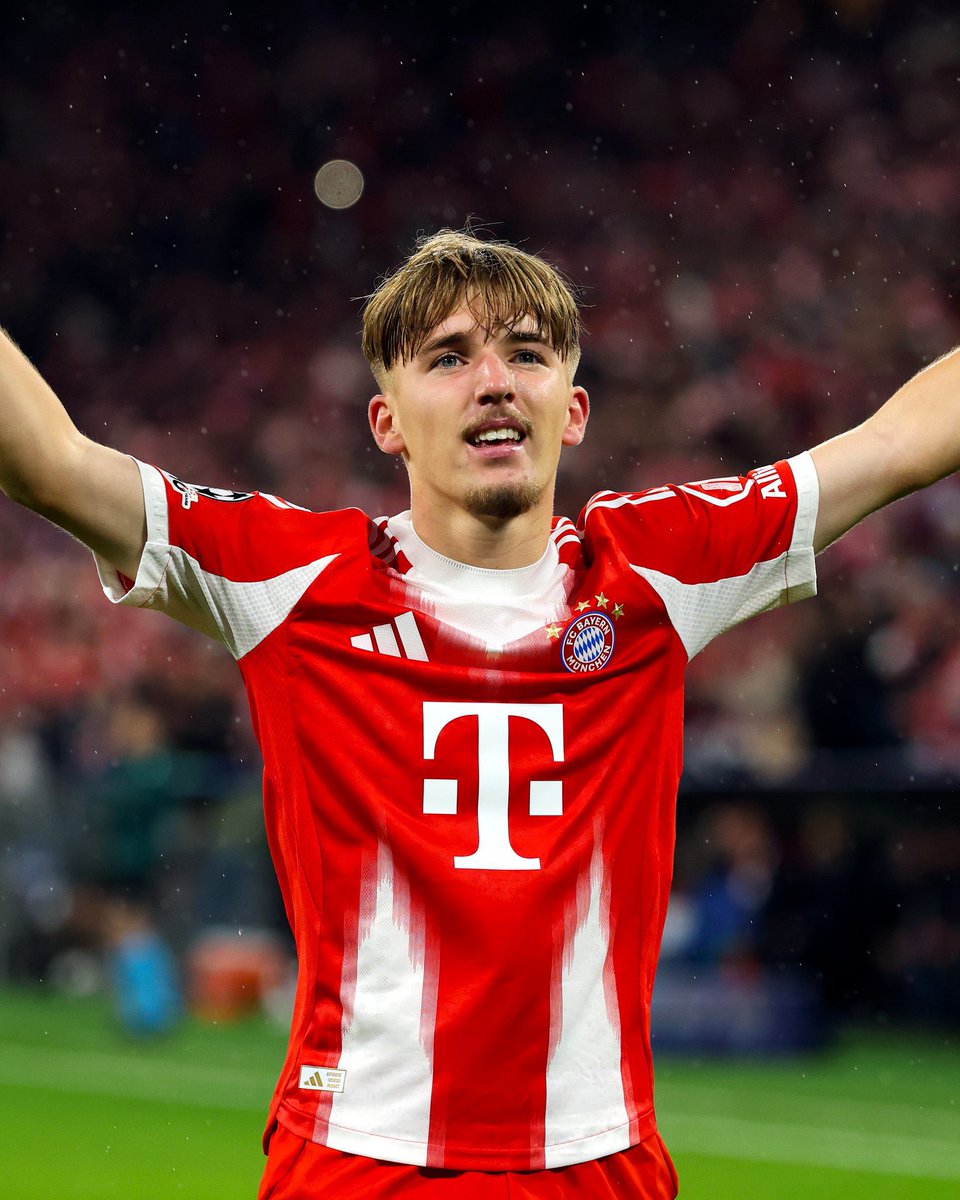
Lennart Karl makes historic Champions League debut as youngest scorer in three consecutive matches
Lennart Karl, the 17-year-old Bayern Munich forward, has etched his name into UEFA Champions League history by becoming the youngest player to score in three consecutive matches. At 17 years and 90 days old, Karl achieved a feat that underscores Bayern’s commitment to nurturing youth talent while signaling a potential shift in the balance of power among Europe’s football giants. His goals, recorded against Club Brugge, Arsenal, and Sporting CP, reflect not only precocious talent but also Bayern’s strategic emphasis on integrating homegrown prospects into high-stakes European fixtures.
Historical context: a club with a storied youth pipeline
Bayern Munich has long positioned itself at the intersection of elite results and rigorous player development. The club’s academy has produced a string of world-class talents who rose through the ranks to compete at the highest level, translating youth potential into immediate impact on Europe’s biggest stage. Karl’s breakthrough arrives within this storied framework, echoing past generations who balanced the club’s immediate need for competitive depth with long-term succession planning. The feat also draws comparisons to other clubs that have leveraged young prodigies to reinvigorate their attacking options during demanding European campaigns, reinforcing a broader trend in European football toward accelerated youth integration.
Early career narrative and breakthrough performance
Karl’s journey from academy standout to Champions League breakthrough illustrates a blend of technical precision, situational awareness, and mental maturity beyond his years. Observers note his ability to read plays quickly, exploit spaces in compact defenses, and finish with clinical composure under pressure. The sequence of goals—first against Club Brugge, then against Arsenal, and finally Sporting CP—highlights a pattern of growth as he adapts to increasingly complex tactical environments and higher-caliber opposition. Bayern’s coaching staff have emphasized his work ethic, decision-making under fatigue, and off-the-ball movement, which collectively help him sustain multi-match scoring runs at the continent’s premier club competition.
Economic impact for Bayern Munich and the market for young talents
Karl’s milestone has tangible implications beyond on-field glory. For Bayern Munich, a club with substantial commercial and sponsorship interests, developing a homegrown star who can influence European competition can enhance brand value, merchandise sales, and matchday attendance, particularly among younger fans and families seeking a pathway to professional football within the club system. In broader terms, his achievement reinforces the financial and reputational incentives for clubs to invest in youth academies as a scalable source of talent that can yield competitive advantage and long-term sustainability. If Karl continues to develop into a consistent scorer in Europe, transfer markets may also reassess the perceived value of teenage prodigies, potentially affecting future negotiations and contract structures across the Bundesliga and the wider European landscape.
Regional comparisons: youth-centric success across Europe
Karl’s accomplishment sits within a regional context where several top clubs are actively integrating teenagers into their senior squads. In England, Premier League clubs have increasingly pursued youth-led breakthroughs as a cultural and commercial strategy, balancing readiness for immediate competition with long-term development pipelines. In Spain and France, clubs have demonstrated that meticulous coaching, data-driven performance analysis, and a patient approach to player maturation can yield players who contribute meaningfully in European nights. Germany’s own football ecosystem, with Bayer 04 Leverkusen, Borussia Dortmund, and RB Leipzig among others, has shown how national leagues can serve as accelerators for prodigies to adapt to top-tier football. Karl’s emergence thus resonates with a broader regional pattern: talent development paired with practical integration into high-stakes matches can redefine competitive dynamics across major European leagues.
Tactical analysis: what Karl’s goals reveal about Bayern’s approach
From a tactical perspective, Karl’s scoring run demonstrates several core principles of Bayern’s playing philosophy. First, his ability to exploit high-pressing systems and quick transitional play aligns with the club’s preference for rapid ball movement and verticality in the final third. Second, his finishing appears to reflect a calm, multi-scenario composure—whether receiving in stride, finishing with the laces into far corners, or finishing from tight angles after rapid combination play. Third, Karl’s movement off the ball often creates passing lanes and space for teammates, reinforcing a collective approach where a young forward can act as a pressure release valve that unlocks deeper attacking sequences. These elements collectively suggest that Bayern’s coaching staff are curating a role for Karl that maximizes his strengths while gradually expanding his tactical responsibilities as he gains experience in Europe’s most demanding environments.
Impact on opponents and the competition landscape
Karl’s rise adds another layer of intrigue to this season’s Champions League narrative. Opponents must contend with the psychological impact of facing a record-breaking teenage scorer who has already proven his ability against diverse defensive setups. For rival clubs, Karl’s trajectory could influence how they prepare for Bayern’s attack, especially if he continues to feature prominently in starting lineups and substitute appearances. The broader competition may see teams adjust their scouting and match preparation to monitor his development, potentially elevating the importance of athletic testing, long-term injury prevention strategies, and data-driven profiling to gauge how teenage prodigies handle the rigors of European football.
Fan reaction and public sentiment
Public reaction to Karl’s achievement has been swift and widespread. Fans have flooded social media with praise for his technical prowess and composure on big-stage moments, while clubs across Europe have lauded the milestone as evidence of Bayern’s continued commitment to youth development. Local supporters in Munich, as well as Bayern’s international fan base, have celebrated this breakthrough as a source of pride and a sign that the club remains a talent magnet capable of producing homegrown stars who can compete with veteran attackers. The emotional resonance of such moments often translates into increased attendance, heightened engagement in club initiatives, and stronger transfer-market attention as analysts and fans alike monitor Karl’s progress.
Historical comparisons to past prodigies
Historically, several young forwards have broken into elite European teams with early goal-scoring runs. Comparisons to players who blended youth with immediate impact can offer valuable benchmarks for Karl’s development path. Analysts may examine metrics such as minutes per goal, goal contribution rates in European competition, and efficiency in decision-making during high-pressure moments. While every player’s trajectory is unique, these benchmarks provide a framework for assessing Karl’s progress over time and predicting how he might adapt to evolving tactical demands as he matures.
Sustainability and long-term potential
Karl’s trajectory raises questions about sustainability. Maintaining form across a full season, balancing European commitments with domestic competitions, and managing physical load are critical for a teenager playing at the highest level. Bayern will likely implement a careful load management plan, integrating rest periods and targeted conditioning to preserve peak performance while safeguarding long-term health. If Karl continues to perform consistently, the club’s strategy could align with the broader objective of establishing a pipeline that sustains competitive depth without over-reliance on a single young star. The outcome will be closely watched by stakeholders, including fans, analysts, and investors who are keenly interested in the club’s ability to translate youth potential into durable success.
Player development pathways: lessons from Bayern and beyond
Karl’s milestone reinforces a broader understanding of how clubs structure youth-to-first-team pathways. A successful transition often hinges on a combination of high-quality coaching, exposure to elite competition, structured mentorship, and gradual escalation of responsibilities on the field. Bayern’s approach appears to weave together these elements, offering Karl opportunities to contribute in meaningful ways while ensuring access to resources that help him refine technical skills, tactical awareness, and psychological resilience. Other clubs may study this model as they design or refine their own development programs, seeking to maximize the probability that academy standouts can eventually anchor top-tier lineups.
Operational details: match-by-match impact
The exact sequence of Karl’s goals provides a compact narrative of his early Champions League impact. His opener against Club Brugge demonstrated his instinct for locating pockets of space in transitional phases, followed by a precise finish that reflected his growing comfort with pressure-packed finishing opportunities. Against Arsenal, he showcased adaptability to different defensive shapes and a penchant for finding the back of the net even when defenses are compact and disciplined. The strike versus Sporting CP further illustrated his capacity to convert chances created by a cohesive Bayern attack, reinforcing the impression that his goals were not flukes but a function of consistent training, situational awareness, and confidence in front of goal. Collectively, these performances contribute to a multi-match scoring streak that stands as a historical marker in Champions League lore.
Broader implications for Bayern’s season
Karl’s scoring streak could influence Bayern’s strategic planning for domestic and European campaigns. A teenage goal-scorer who can deliver on big nights may alter the club’s usage of veteran forwards, potentially enabling a shift toward a more balanced attacking lineup that leverages youth energy alongside established experience. From a tactical standpoint, Karl’s continued presence in the lineup can signal a flexible approach to matchups, enabling coaches to tailor attacking routes to exploit specific opponent weaknesses while preserving rotational depth. For supporters, this dynamic adds a layer of anticipation to every European fixture, with Karl’s involvement often seen as a barometer of Bayern’s ambition on the continental stage.
Closing perspective: a turning point or a promising ascent?
Karl’s achievement is a notable milestone in European football, highlighting how youth development, tactical precision, and competitive pressure can converge to produce record-breaking moments. Whether this marks the beginning of a sustained ascent or remains a compelling chapter in a broader career trajectory remains to be seen. What is clear is that Bayern Munich has reinforced its identity as a club willing to blend tradition with forward-thinking development strategies. As Karl continues to navigate the demands of elite competition, observers will watch closely to see how his contributions evolve, how opponents adapt, and how the club leverages this landmark to shape its trajectory in the coming seasons.