Debate Over Media’s Role in Violence and Division Rekindles National Conversation
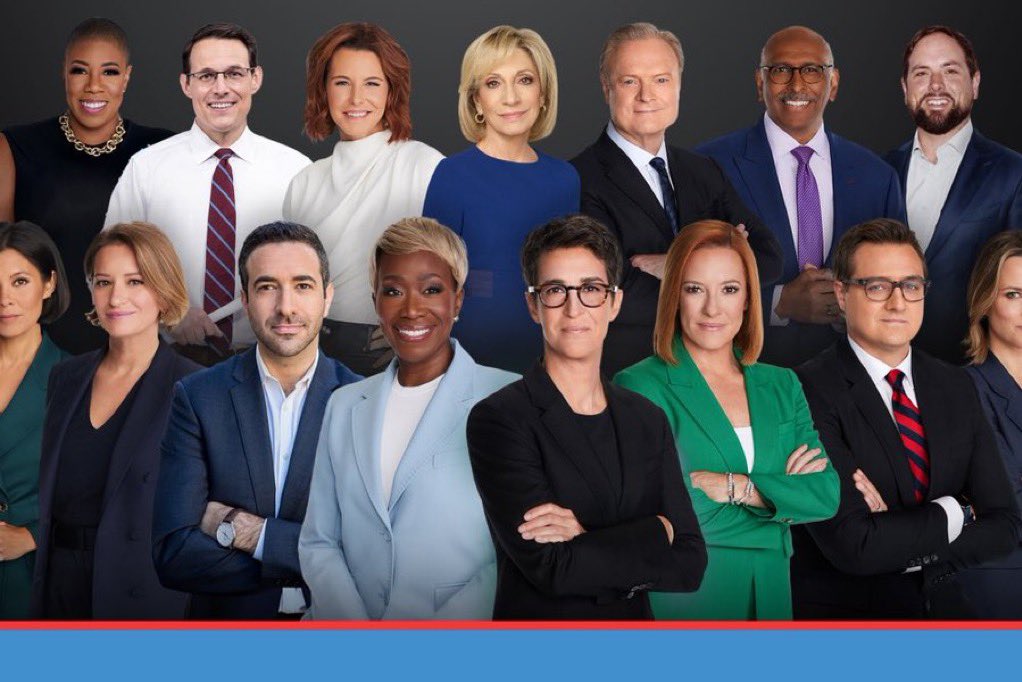
On September 14, a public inquiry questioning whether the so-called “liberal media” contributes to violence and societal division sparked a wave of responses across platforms. The question was accompanied by a group photo of several high-profile news personalities, igniting fresh discussion about the role of media in shaping political discourse, advancing narratives, and influencing the public perception of national issues.
The conversation drew passionate commentary from across the political spectrum. Some participants pointed to historical precedents, citing moments when media coverage amplified tensions, while others defended journalistic integrity and emphasized the importance of a free press. Alongside opinions, users shared photos,s, and archival clips to underscore arguments about how domestic news coverage can inflame or soothe conflict.
Historical Context of Media Influence
Concerns over media fueling division are not new. Throughout American history, the press has been accused of heightening conflict and partisanship during critical moments.
In the 18th and 19th centuries, the fiercely partisan newspapers of the early republic often spread rumors or outright attacks on political rivals, cementing divisions in a fledgling democracy. During the Civil War, competing regional presses presented polarized coverage of the conflict, influencing public support for or against national unity.
The 20th century saw mass communication grow in influence with radio, television, and later, cable news. During the Vietnam War, televised images of combat and antiwar protests deeply shaped public opinion, increasing opposition to U.S. military involvement. Scholars have long debated whether the coverage accelerated public disillusion or simply reflected it.
Similarly, the Civil Rights Movement depended heavily on media coverage to showcase images of nonviolent protesters clashing with police. Broad exposure to these scenes helped galvanize national support for change but also deepened cultural and regional divides.
Media and Political Polarization
In today’s digital era, the media landscape is fragmented like never before. The rise of cable television in the 1980s, with networks adopting distinct political leanings, set the groundwork for a media environment where information is segmented into ideological silos.
Critics argue that television segments, evening panels, and provocatives frequently prioritize outrage and sensationalism over measured reporting, contributing to entrenched partisanship. This effect has only intensified with the advent of social media platforms, where short clips, soundbites, and memes circulate much faster than fact-checked investigations.
Political scientists note that partisan outlets on both the left and right use emotionally charged narratives to drive audience engagement. While supporters view this as a means of providing representation for their viewpoints, detractors warn that it fosters distrust in institutions and delegitimizes opposing voices, leading to a more fragile civic discourse.
Public Response to the September 14 Question
The September 14 query about the role of the liberal media quickly became a rallying point online, eliciting both criticism and defense of journalistic institutions.
Those critical of the mainstream press argued that selective coverage of protests, crime, and political rallies often conveys a distorted picture that fuels hostility between groups. Many mentioned recent flashpoints, such as coverage of demonstrations and election cycles, claiming that framed narratives could escalate resentment.
Others defended journalists, stressing that the First Amendment safeguards the right of media organizations to hold institutions accountable and report on sensitive events. Supporters highlighted examples of investigative reporting uncovering government corruption, human rights abuses, and corporate misconduct, underscoring that these efforts have contributed to national reform and transparency.
The photo of prominent anchors appearing alongside the inquiry seemed to generate intense reactions, with some interpreting it as symbolic of perceived bias, while others dismissed it as an oversimplification unfairly targeting individuals for systemic issues in modern news delivery.
Comparisons to Global Media Landscapes
Internationally, the role of the press in shaping social stability varies. In parts of Europe, strong public broadcasters often serve as consensus builders, though critics argue that state-funded models can slip into favoritism depending on who controls the government. Meanwhile, private networks in many countries face similar accusations as in the United States: placing ratings and profits above balance.
In Latin America, for instance, privately owned media outlets have historically been accused of reinforcing ruling-class narratives or, conversely, of being suppressed when challenging political leadership. In Asia and Africa, where press freedoms can fluctuate, media influence often intertwines with the level of governmental control, sometimes stoking division, as seen during electoral crises.
The global comparisons highlight that the debate is not uniquely American. Across democracies, the balance between press freedom, accountability, and responsible reporting remains a recurring challenge.
Economic Pressures on Media Outlets
Beyond ideological divides, the structural pressures of today’s media marketplace have escalated concerns about accuracy and responsibility. Traditional advertising revenues have declined sharply in the digital era, pushing outlets to compete for viewership through alternative business models such as online subscriptions, sponsored content, or algorithm-driven advertising.
This economic shift has heightened the temptation to produce polarizing or emotionally charged content that drives clicks, shares, and sustained engagement. Analysts argue that this incentive structure encourages simplified narratives and dramatic framing rather than nuanced reporting. As audience loyalty becomes paramount, the line between objective reporting and entertainment often blurs.
The Role of Social Media in Amplification
Perhaps the most transformative factor in this discussion is the influence of social media. Platforms amplify messages instantaneously, enabling both professional journalists and ordinary individuals to shape public narratives. Virality often depends not on accuracy but on shareability, which can magnify partisan content and conspiracy theories alike.
Algorithms tend to reward engagement, meaning that highly charged emotional or confrontational posts spread more widely than sober analysis. As a result, the perception of “media bias” is intertwined not only with traditional outlets but also with the ways audiences consume, interpret, and distribute content.
The Longstanding Debate Over Press Responsibility
The September 14 inquiry underscores a recurring debate: should the media be seen primarily as a watchdog that challenges power, or does it also bear direct responsibility for social divisions resulting from its coverage?
Advocates for press freedom emphasize that journalists cannot control how audiences interpret reporting, and that accountability for violence or unrest should rest with perpetrators rather than coverage. Critics counter that language choices, images broadcast, and selective storylines can escalate mistrust, fear, and anger within communities.
This tension between watchdog journalism and the unintended social outcomes of coverage has echoed for decades, appearing after civil unrest, wartime reporting, election verdicts, and judicial rulings.
The Future of Media Trust
Recent polls show declining trust in news organizations across demographics, with generational differences shaping consumption habits. Younger audiences are increasingly skeptical of established television networks, preferring digital outlets and independent creators, while older generations often remain loyal to traditional programs.
Media scholars caution that without restoring trust, the environment risks further fragmenting. Potential solutions often cited involve greater transparency in sourcing, clearer labeling of opinion versus reporting, and investment in fact-checking. At the same time, media literacy initiatives are being promoted to help audiences critically evaluate information, an area some experts believe is as important as regulation.
Conclusion
The events of September 14 intensified a long-standing national dialogue about the power and responsibility of the media in shaping American society. While some continue to argue that bias in major outlets exacerbates division and even violence, others maintain that scrutiny of institutions is vital to democracy and that the greatest danger lies not in an active press but in silencing it.
With technology accelerating the speed at which narratives spread and economic forces reshaping newsroom priorities, the question is unlikely to fade anytime soon. Historical precedent, global comparisons, and ongoing public debate all suggest that defining the proper role of media — both liberal and conservative — will remain a central issue in the way nations understand themselves, resolve their conflicts, and protect the ideals of a free press.