Beirut Web of Allegations: Jarrah Family Ties to Alleged Spy Networks Highlight Decades of Middle East Espionage
Beirut, Lebanon — A new wave of archival reporting and court filings is bringing renewed scrutiny to the family of Ziad Jarrah, the hijacker-pilot who participated in United Airlines Flight 93 during the September 11, 2001 attacks. While the core facts of 9/11 remain unchanged, the emerging details about Jarrah’s relatives and their alleged connections to intelligence operatives have sparked debates about espionage history in the Levant, the reach of outside intelligence services, and the lasting impact on security collaborations across the region.
Historical context: a long history of covert activity and shifting alliances
The Jarrah family’s recent spotlight sits atop a decades-long backdrop of covert operations in Lebanon and the broader Middle East. Lebanon’s complex political landscape—woven with local factions, regional powers, and international intelligence interests—has long been a hub for espionage activity. In the late 20th and early 21st centuries, foreign intelligence services pursued diverse objectives, from gathering information on militant groups and neighboring states to monitoring refugee movements and political alignments. The narrative surrounding Ali al-Jarrah and Yusuf al-Jarrah, alleged to have worked for Israel’s Mossad, intersects with a broader history of Lebanese citizens who found themselves navigating loyalties between local political factions and external intelligence agencies.
The 1980s and 1990s, a period of intense conflict and reconciliation across the region, saw numerous cases in which individuals from Lebanon were accused of intelligence work—either as agents or informants—on behalf of regional or external powers. The allegations against Ali and Yusuf al-Jarrah reportedly trace back to recruitment in the 1980s and involve information channels about Palestinian militant groups, as well as movements of Syrian troops. If corroborated, these claims would add to the long list of testimonies and affidavits that scholars and investigators have used to map the informal networks that bridged local militias, state actors, and clandestine organizations.
Flight 93 and the endurance of symbolic artifacts
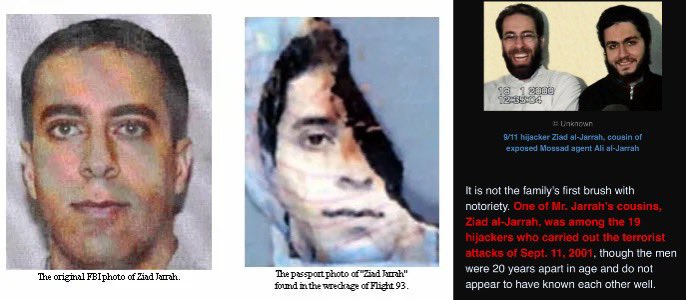
In the broader narrative of 9/11, certain artifacts have taken on enduring symbolic significance. Reports that a passport bearing Ziad Jarrah’s photo was recovered intact from the Flight 93 crash site—despite the catastrophic impact and subsequent fires—have not only provoked questions about evidence handling but also fueled public curiosity about the human networks behind the plot. While official investigations emphasize the hijackers’ training, funding, and operational coordination, artifacts like a passport become focal points for media and public discourse around identity, nationality, and the anonymity often sought by clandestine operatives.
The family connection: a cousin with a separate hijacking history
Public records and journalism indicate that the Jarrah family’s involvement in hijacking-related events predates the 9/11 attacks. A cousin named Ziad al-Jarrah reportedly participated in a 1970 hijacking carried out by the Popular Front for the Liberation of Palestine (PFLP). The historical note that two individuals with the same surname—born roughly two decades apart—were involved in hijacking plots at different times underscores the complexity of family histories in conflict zones. What remains unclear is whether these acts reflect direct collaboration, shared political beliefs, or the chaotic and opportunistic nature of radical activities in a region where loyalties can be fluid and the line between personal and political action frequently blurred.
Regional comparisons: espionage narratives across the Middle East
The alleged Mossad ties attributed to Ali and Yusuf al-Jarrah sit within a broader regional tapestry of intelligence activity that has drawn international attention for decades. Across neighboring states, cases have emerged where individuals with Lebanon or Palestinian connections operated in roles described as informants, couriers, or agents for foreign services. Comparisons with other high-profile espionage cases reveal a few consistent patterns: recruitment within periods of conflict or upheaval, the use of diaspora or cross-border identities to facilitate operations, and the perennial challenge of verifying allegations given the lack of transparent, publicly available evidence.
The economic impact: security, finance, and regional stability
Although the Jarrah family’s alleged activities appear to involve intelligence matters rather than direct commercial ventures, the implications ripple into the broader economy through several channels:
- Security costs and risk management: Businesses operating in the region face heightened risk assessments and the need for more robust security protocols, particularly in transit hubs, embassies, and multinational offices. Heightened vigilance and counterintelligence measures can drive operating costs higher.
- Insurance and risk premiums: Perceived geopolitical risk translates into premiums for air travel, cargo shipments, and international commerce. Airlines and shipping companies may adjust routes and schedules to mitigate exposure, impacting regional trade patterns.
- Tourism and investment sentiment: Publicized espionage allegations can influence investor confidence and tourism, sectors sensitive to perceptions of regional stability. While Lebanon and surrounding markets remain resilient in many cases, persistent uncertainty can temper investment flows and visitor numbers.
- Regional cooperation incentives: On the flip side, high-level security collaborations prompted by shared threats can lead to structural financing for border controls, cybersecurity infrastructure, and intelligence-sharing frameworks that benefit mutual economic security in the longer term.
Public reaction and the broader media landscape
News about allegations involving families connected to infamous terrorist events often triggers a complex mix of curiosity, caution, and condemnation. In Beirut and regional media, discussions tend to revolve around questions of accountability, due process, and the reliability of sources when confronting sensitive topics tied to intelligence histories. Public sentiment can skew toward a desire for clarity and justice, while political actors may frame these narratives within broader debates about national security and regional threat perceptions. Journalists face the challenge of presenting sensitive material with rigor, relying on verifiable records, corroborated testimonies, and careful contextualization to avoid glamorizing or sensationalizing violence.
Journalistic standards: verifying links between individuals and intelligence work
Experts emphasize that drawing direct lines between individuals and intelligence services demands careful corroboration. Key steps include cross-referencing court records, government statements, declassified documents, and credible interviews with law enforcement and intelligence historians. In conflicts where many years have passed, evidence can be fragmentary, and early records may be redacted or classified. Responsible reporting prioritizes verified timelines, known affiliations, and documented actions rather than speculative connections. It also carefully distinguishes between confirmed operational roles and unverified rumors circulating in circles affected by the long shadow of conflict.
Implications for Lebanese security policy and regional governance
If the reported connections between the Jarrah family and Mossad or other intelligence outlets are substantiated, several governance implications could emerge:
- Enhanced interagency collaboration: Lebanon–Israel detente, regional intelligence sharing, and cross-border security arrangements may be influenced by new or renewed investigations. Agencies could pursue joint approaches to counter terrorism and illicit networks.
- Public transparency and accountability: Authorities might push for more transparent historical accounts of espionage activities to bolster public trust, particularly in contexts where national narratives are shaped by memory of conflict.
- Cyber and signals intelligence investments: Since modern intelligence competition increasingly emphasizes cyber capabilities, regional governments may accelerate investments in cyber defense and signals intelligence to counter evolving risks.
Historical limitations: what remains unclear
A number of questions persist. To what extent did Ali and Yusuf al-Jarrah actually operate as paid informants for Mossad? What were the precise channels of funding, and how did information flow between operatives in Lebanon, across borders, and into the hands of foreign agencies? How should historians and policymakers interpret a grandmotherly-seeming chain of legacy events—where one family member participates in a 1970 hijacking, and another in a 2001 strike? In many cases, available records leave gaps that only further research, declassified documents, and archival access can begin to fill.
Contextualizing within aviation security and counterterrorism lessons learned
The broader aviation security landscape continues to evolve in response to past tragedies. Post-9/11 reforms reshaped airport screening, passenger data handling, and international cooperation on security intelligence. The continuing evolution of threat assessment models emphasizes risk-based screening, behavioral analysis, and real-time sharing of threat indicators across jurisdictions. The Jarrah case, as part of the wider mosaic of 9/11-related investigations, underscores the enduring importance of robust identity verification, meticulous passenger screening, and resilient counterterrorism operations that combine intelligence, law enforcement, and aviation authorities.
Public records and ongoing inquiries
Investigative reporting and court filings in various jurisdictions have intermittently surfaced references to connections between individuals in the Jarrah family and intelligence services. While some sources offer allegations and claimed confessions, others stress the need for caution in interpreting disputed claims. As with many historical espionage narratives, the weight of evidence often rests on a combination of contemporaneous records, corroborated testimonies, and independently verifiable documentation. The pursuit of a more complete picture continues as researchers access declassified materials, review diplomatic cables, and consult archival histories from multiple countries.
Regional ripple effects: Lebanon’s intricate security apparatus and civil society response
Lebanon’s security infrastructure is shaped by a diverse array of actors, including state security services, internal security forces, and remnants of militias that once operated with external sponsorship or influence. In such an environment, allegations of espionage intersect with the delicate balance of power among political factions, religious communities, and regional states. Civil society groups and journalists frequently advocate for transparency and accountability in security matters, arguing that a well-informed citizenry strengthens democratic resilience. Public debates often explore how past covert activities influence current security policies, borders, and cross-border cooperation with neighboring countries.
Methodology and ethical considerations for coverage
Reporting on espionage-related matters demands careful handling of sensitive information. Ethical journalism requires avoiding sensationalism, protecting sources when necessary, and clearly distinguishing between confirmed facts and unverified claims. In-depth reporting should seek multiple corroborating sources, assess potential biases, and present clear timelines so readers can understand how events unfolded. Visual storytelling might incorporate historical photographs, archival documents, and reputable simulations to convey the scale and context without compromising operational security or endangering individuals.
Looking ahead: what to watch in the coming months
- Official statements: Any forthcoming statements from Lebanese authorities, international partners, or intelligence historians could shed more light on the alleged connections and provide a clearer chronology.
- Declassified records: The release of declassified documents from state archives or intelligence agencies may offer new details about the individuals involved and the nature of their activities.
- Scholarly analyses: Researchers in Middle East studies and security studies are likely to publish retrospective analyses that situate the Jarrah family’s alleged ties within broader patterns of clandestine activity in the region.
Public health and societal resilience in times of uncertainty
Beyond the realm of security and geopolitics, communities in Beirut and neighboring cities often respond to heightened information environments with a focus on resilience and continuity. Local leaders emphasize the importance of maintaining essential services, education, and economic activity despite political or security-related ebbs and flows. In many neighborhoods, communities channel energy into constructive initiatives—small business development, cultural exchanges, and charitable programs—that reinforce social cohesion even as the geopolitical weather remains unsettled.
A note on accuracy and responsible storytelling
As the story develops, readers are encouraged to consult a range of sources, including court records, official investigations, and independent scholarly work. The aim is to present a nuanced, evidence-based account that respects the gravity of past events while avoiding speculation or unverified conjecture. History is often multi-faceted, and new disclosures can shift interpretations; ongoing coverage should reflect the dynamic nature of the information landscape surrounding espionage, terrorism, and regional security.
Conclusion: tracing threads of a complex past
The revelations surrounding Ziad Jarrah’s family invite renewed examination of a layered history in which individual actions intersect with broader political and intelligence currents. The alleged Mossad connections attributed to Ali and Yusuf al-Jarrah, if substantiated, would not only reshape understandings of a single family’s past but also contribute to a more comprehensive portrait of regional espionage networks over recent decades. While the public deserves clarity, the path to definitive conclusions requires meticulous documentation, cross-border cooperation, and a commitment to rigorous, nonpartisan analysis that centers on verifiable facts, historical context, and the enduring quest to understand how clandestine histories influence the present security landscape.