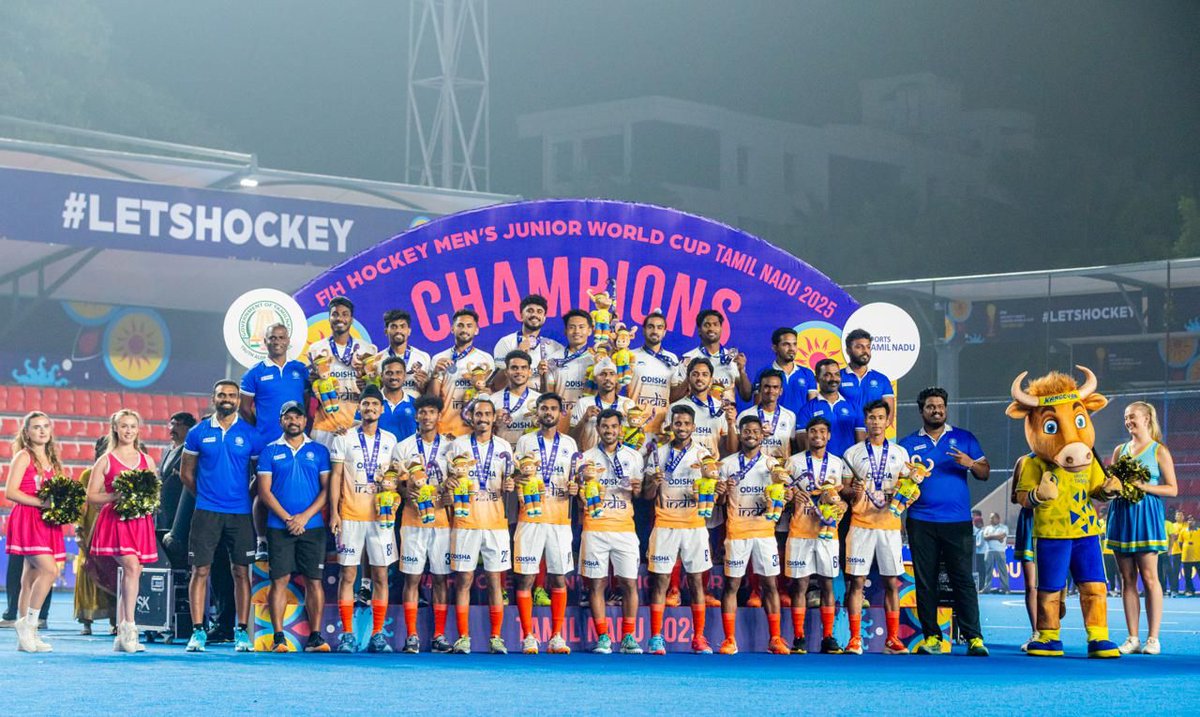
Indian Junior Men’s Hockey Team Wins Historic Bronze at 2025 World Cup, Marking a New Era for Indian Hockey
Chennai, December 11, 2025 — India’s junior men’s hockey team clinched a historic bronze medal at the FIH Hockey Men’s Junior World Cup 2025, delivering a milestone achievement that resonates beyond the stadium lights of Tamil Nadu. The victory, earned in a hard-fought bronze medal match, completes a journey rooted in decades of development, infrastructure investment, and a renewed national interest in the sport. It also signals a potential shift in the global junior hockey landscape, where rising teams challenge traditional powerhouses with a blend of speed, skill, and strategic discipline.
Historical context: a long arc toward youth excellence India’s hockey story is steeped in both triumph and trial. From the sport’s early imperial roots in British India to the legendary prowess of the 1970s and 1980s, India’s national teams enjoyed periods of dominant play on both the field and the world stage. The junior world cup, introduced to foster the next generation of talent, has become a critical barometer for a country’s wider hockey ecosystem. The 2025 bronze medal not only adds a new chapter to India’s trophy cabinet but also confirms the effectiveness of targeted youth programs that emphasize technical refinement, fitness, and tactical understanding from a young age.
Over the past decade, Indian hockey has benefited from a comprehensive, multi-tier development model. State-level academies, school-level feeder programs, and national training centers have been reinforced with modern facilities, professional coaching, and international exposure. The junior team’s success at the World Cup reflects these structural investments, which aim to produce players who can compete at the highest level, adapt quickly to varied playing styles, and carry experience into senior national squads.
Economic impact and industry ripple effects Beyond medals and national pride, the bronze at the Junior World Cup has tangible economic implications for Indian hockey and associated sectors. Hosting the tournament in Tamil Nadu generated regional economic activity, from hotel occupancy and restaurant patronage to transportation and event services. The visibility of a medal-winning team bolsters sponsorship interest, potentially expanding partnerships with sports equipment brands, local enterprises, and regional development funds focused on grassroots participation.
Local municipalities and state authorities, recognizing the broader value of sport diplomacy, often pair such successes with investments in sports infrastructure, youth outreach programs, and community-based health initiatives. In the longer term, a thriving hockey ecosystem can contribute to job creation in coaching, sports science, analytics, medical support, and administration. Cities and regions that have historically aligned with hockey development may leverage this momentum to attract tournaments, youth camps, and even small- to mid-sized manufacturing supply chains that support training facilities and equipment needs.
Regional comparisons: where India stands today The 2025 bronze medal places India among a cohort of nations with robust junior programs and a track record of cultivating talent through structured pipelines. Traditional powerhouses in junior hockey, such as the Netherlands, Germany, and Australia, maintain deep pools of players who benefit from strong domestic leagues, high-performance academies, and frequent international competition. In Asia, India’s improved results complement the region’s rising competitiveness, with neighboring countries and other Asian powerhouses increasingly investing in youth development to close the gap with established European and Oceanian programs.
India’s performance on the world junior stage has often been a bellwether for the senior team’s prospects. While junior success does not automatically translate to senior-level medals, it typically correlates with improved depth, bench strength, and tactical flexibility. The 2025 bronze medal could be a signal of a broader national strategy bearing fruit, with more players transitioning to senior duties and bringing fresh styles and resilience to the national squad.
Dissecting the victory: on-field dynamics and key players In the bronze medal match, the Indian junior squad demonstrated a balance of possession, pace, and disciplined defense that proved decisive against a rival with a contrasting style. The team’s midfielders unlocked channels with quick interchanges and accurate passing, while the forwards pressed high and converted set-piece opportunities with composure. The goalkeeping unit delivered crucial saves at pivotal moments, maintaining momentum when nerves ran high and the stakes felt immediate to fans watching around the world.
Behind the performances on the field lies a blend of preparation strategies that contributed to the bronze-winning campaign. The squad benefited from data-driven training regimens, with performance analytics guiding players’ workload management, recovery protocols, and skill development priorities. Sports science support, including nutrition, biomechanics, and injury prevention, helped the team sustain intensity through the tournament’s demanding schedule. The coaching staff emphasized a culture of resilience, emphasizing teamwork, adaptability, and a growth mindset that translated into confident performances in key fixtures.
Public reaction and national significance Public reaction to the bronze medal was swift and celebratory across Indian cities and towns. Fans gathered in public squares, on college campuses, and at club venues to watch the decisive match, creating a shared sense of pride. Social media echoed with messages of encouragement from former players, coaches, and youth participants who see a pathway to the Olympic dream through the junior program. The medal is often framed as a symbol of national perseverance—an acknowledgment that investment in youth sports can yield dividends beyond the realm of medals, influencing social narratives and the educational environment by encouraging healthy lifestyles and community involvement.
Media coverage globally recognized India’s growth in junior hockey, highlighting the domestic structures that nurture talent from a young age. While the focus remains on the spectacle of the tournament and the drama of the matches, observers note the importance of stable funding models, consistent coaching standards, and international exposure for young athletes. The bronze medal’s resonance is likely to endure, with schools and clubs citing it as inspiration to expand grassroots participation and to attract communities that historically faced barriers to entry in organized sport.
Looking ahead: prospects for the senior national program and sustained momentum A bronze medal at the junior level often serves as a springboard for the senior national team. The 2025 result could accelerate the pipeline of athletes transitioning to senior duties, injecting fresh energy and a new style into national campaigns. National federations may prioritize extended international tours, benchmarking against top junior squads to identify areas for refinement and to ensure continued progress in technique, speed, and tactical versatility.
Coaches and analysts are likely to emphasize refining shooting accuracy, ball control under pressure, and decision-making in high-tempo situations. The development of set-piece routines—such as penalty corners and circumspect free-hit strategies—could be a focal point, given the decisive role these moments often play in tight matches. Training programs may increasingly integrate psychology support to help players manage expectations, nerves, and the pressures of international competition, fostering competitive composure across all stages of a tournament.
Sociocultural implications: sport as a unifying force The junior team’s success arrived at a moment when sport is increasingly viewed as a unifying force in a diverse nation. The bronze medal can amplify youth engagement in physical activity and provide a source of collective pride across different communities. It may also influence public policy discussions related to school sports funding, facility availability, and community programs that encourage participation in team sports. As communities rally around the team’s achievements, youngsters across regions may be motivated to pursue hockey with renewed enthusiasm, potentially broadening the talent pool for future generations.
Operational considerations: grassroots development and accessibility To sustain momentum, continued emphasis on grassroots development remains essential. Investment in local academies, inclusive programs, and accessible facilities ensures that a wider range of young people can participate in hockey. Equal access to coaching, equipment, and opportunities to compete is crucial for broad-based participation, which in turn strengthens the talent pipeline. Public-private partnerships that focus on sustainable practice, coaching education, and safe, supportive environments help ensure that the sport’s growth translates into long-term performance at all levels.
Data-driven narrative: measuring progress beyond medals While medals are a clear indicator of success, broader metrics capture the health of the sport’s ecosystem. Metrics such as youth participation rates, the number of certified coaches, investment in facilities, and the rate at which junior players transition to senior squads offer a more nuanced view of progress. International competition exposure and performance consistency across tournaments also provide evidence of program maturity. A transparent, data-driven approach enables federations to adjust strategies and allocate resources where they yield the greatest impact.
Conclusion: a pivotal moment for Indian hockey The 2025 World Cup bronze medal for India’s junior men’s hockey team stands as a landmark achievement with implications that go beyond the podium. It reflects a concerted effort to cultivate young talent, harnessing infrastructure, coaching, and support systems that empower athletes to compete on the world stage. The victory is a source of national pride and an indicator of the potential for sustained growth within Indian hockey. As viewers reflect on the match and the memories it creates, the broader hockey community—fans, families, and future players—will look to this moment as a turning point that could redefine India’s position in international hockey for years to come.