Avatar: Fire and Ash Marks Half-Century Realization of a Vision, Expanding Sci‑Fi Frontiers
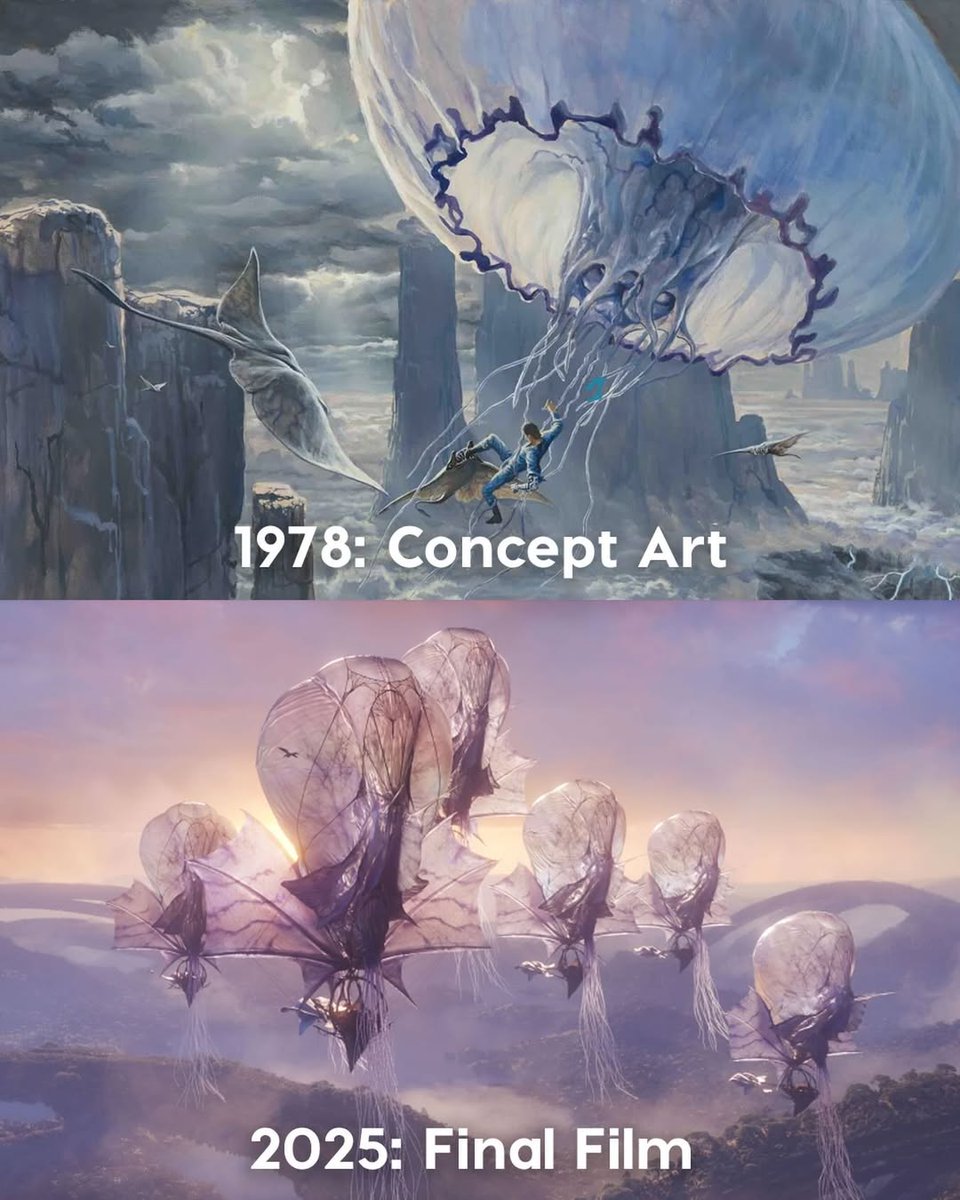
The long-held imagination of director James Cameron has leaped from concept art to cinematic reality with Avatar: Fire and Ash, a film that marries a half-century of anticipation with contemporary storytelling technology. Originally conceived in 1978 as the Mesa Planet concept for the short Xenogenesis, Cameron’s vision has evolved into a feature-length epic that expands the universe introduced in Avatar and its sequels. This latest installment not only fulfills a creative promise but also catalyzes renewed interest in large-scale, immersive filmmaking that blends practical ambition with digital innovation.
Historical Context: From Concept to Cinematic Revolution The Mesa Planet concept emerged in Cameron’s early explorations of world-building, long before the advent of modern motion capture and high-dynamic-range imaging. In the late 1970s, filmmakers and visual effects artists were exploring the boundaries between practical effects and the burgeoning potential of computer-generated imagery. Cameron, known for pushing technical boundaries, sketched a planet with distinctive geography, atmospherics, and ecological systems that could sustain a narrative as expansive as it was speculative. Over the decades, as technology advanced—from 3D modeling and virtual production to photorealistic rendering—this initial concept found fertile ground in Cameron’s ongoing Avatar project. The result is a film that threads the original Mesa Planet imagery into a broader, deeply layered universe.
The film’s production trajectory mirrors broader industry shifts. In the 1980s and 1990s, directors experimented with motion capture and early CGI, but the industry faced constraints in rendering fidelity, lighting, and mass-market distribution. Cameron’s persistence, coupled with a growing ecosystem of specialized effects studios, allowed for increasingly ambitious virtual environments, sophisticated motion capture, and improved real-time rendering. Avatar: Fire and Ash leverages these advancements to reimagine a familiar cosmos through a new lens. The film’s development also reflects a broader trend toward long-form franchise storytelling that blends thematic ambition with technical prowess, a combination that has become a hallmark of modern blockbuster sequencing and world-building.
Economic Impact: A Multiplier Effect Across Creative Industries The arrival of Avatar: Fire and Ash carries meaningful economic implications beyond its impressive on-screen spectacle. The film’s production consumed a substantial allocation of high-end visual effects capacity, animation talent, and specialized post-production services. This demand supports studios that pioneer new rendering pipelines, AI-assisted workflow optimizations, and photorealistic digital agents that can accelerate production timelines without sacrificing quality. The ripple effects extend to local economies where production incurs expenditures on set construction, location services, and hospitality, often providing a temporary but meaningful boost to regional industries.
Market expectations for the film also reverberate through ancillary sectors. Merchandising, licensing, and experiential entertainment opportunities align with a broader consumer interest in world-building and immersive experiences. This aligns with a growing market for cinematic universes that invite fans to engage across multiple formats, including interactive media, virtual reality experiences, and branded events. The economic model for such ventures increasingly favors integrated, cross-platform experiences that generate revenue streams beyond the traditional box office, including streaming, premium video on demand, and licensing partnerships.
Regional Comparisons: Global Reception and Local Industry Effects Avatar: Fire and Ash has drawn attention across diverse regions, with notable differences in reception that reflect local media ecosystems and cultural preferences. In North America, the film’s expansive scope and technical sophistication resonate with audiences who have followed the Avatar franchise since its inception, reinforcing a preference for large‑scale cinematic experiences. In Europe, the blend of ecological themes and advanced effects aligns with a tradition of high‑fidelity genre storytelling, while drawing attention to environmental narratives that have strong resonance in many European markets. In Asia-Pacific, the film’s technical achievements are often celebrated alongside a growing appetite for science fiction epics, as local studios increasingly invest in formal partnerships and joint ventures to access global distribution channels.
From an industry perspective, the film’s success underscores the importance of local visual effects ecosystems. Cities that host high-end VFX facilities attract international productions, fueling knowledge transfer and workforce development. Training programs, specialized pipelines, and cross-border collaborations help cultivate a durable talent pool capable of sustaining complex productions. The regional contrasts also reflect broader patterns in consumer behavior: demand for immersive, technology-forward entertainment remains strong, while subtler preferences for narrative pacing, character development, and thematic nuance vary by market.
Storytelling Craft: Balancing Spectacle with Substantive Narrative At the heart of Avatar: Fire and Ash lies a deliberate balance between majestic world-building and human-centered storytelling. The Mesa Planet serves as a canvas for ecological storytelling, where landscapes function not only as backdrops but as integral participants in the drama. The film’s pacing navigates between awe-inspiring set pieces and intimate character arcs, offering viewers moments of reflection amid grand-scale action. This balance is essential for maintaining engagement over what is often a long-form narrative arc, particularly in a franchise that invites continued exploration across sequels and related media.
Characterization in the film benefits from Cameron’s commitment to multi-dimensional figures whose choices shape the narrative’s trajectory. Protagonists confront ethical dilemmas that arise from ecological stewardship, technological advancement, and interplanetary diplomacy. The story avoids simple binaries, instead presenting a spectrum of motives and consequences that invite audiences to consider the broader implications of human expansion into space ecosystems. This nuanced approach helps the film transcend pure spectacle, inviting viewers to engage with questions about resource use, habitat preservation, and the responsibilities that accompany powerful technologies.
Technical Brilliance: Innovation Driving Immersion Avatar: Fire and Ash stands as a testament to the synergy between art and engineering. The production deploys advanced lighting systems, texture pipelines, and motion capture techniques to render the Mesa Planet’s terrain with unprecedented fidelity. Real-time rendering and scalable cloud-based workflows enable iterative experimentation, allowing filmmakers to refine camera movements, environmental dynamics, and creature design in ways that were unimaginable a generation ago. The result is a more immersive cinematic experience that invites audiences to feel as if they inhabit the planet alongside its inhabitants, a hallmark of Cameron’s approach to world-building.
Sound design and musical scoring further elevate the film’s immersive quality. The sonic landscape complements the visual spectacle, embedding emotional cues within the environmental soundtrack and underscoring themes of discovery, danger, and wonder. The integration of sound with visual storytelling amplifies the sense of immersion, encouraging audiences to perceive the Mesa Planet as a living, reactive world.
Public Reaction: Anticipation, Debate, and Cultural Imprint Early audience reactions emphasize the film’s sense of awe and its fidelity to Cameron’s foundational vision. Viewers praise the scale of the landscapes, the texture of the planet’s climates, and the intricate choreography of action sequences that unfold across varied topographies. Some critics highlight the effective integration of the Mesa Planet concept with the franchise’s broader mythos, while others comment on how the film expands its ecological message without sacrificing momentum. The public discourse also touches on questions about future installments, including the potential for cross-media storytelling that builds a cohesive, multi-narrative universe.
Environmental and Technological Considerations Beyond entertainment value, Avatar: Fire and Ash prompts reflection on environmental storytelling and the role of technology in shaping public perception. The film’s depiction of planetary ecosystems can spark discussions about real-world conservation efforts, climate resilience, and the impact of human activity on fragile habitats. Technological advancements demonstrated in the film—such as high-fidelity digital environments and lifelike character simulations—illustrate how cinema can walk a line between speculative imagination and plausible scientific extrapolation. This dynamic positions the film as not only a source of entertainment but also a catalyst for public interest in science, technology, engineering, and math disciplines.
Long-Term Franchise Impact: Framing the Next Era of Visual Storytelling As part of a broader franchise strategy, Avatar: Fire and Ash sets the stage for subsequent installments and spin-offs. The creative approach prioritizes continuity of visual language, world-building rules, and character arcs that can sustain an extended narrative period. Industry observers note that this model encourages studios to invest in robust production pipelines, flexible scheduling, and cross-platform storytelling. The film’s success may influence how studios allocate budgets for immersive technologies, virtual production capabilities, and talent development, signaling a shift toward long-term commitments to cinematic universes that intertwine film, streaming, and experiential media.
Conclusion: A Milestone for Vision, Craft, and Economic Realization Avatar: Fire and Ash represents more than a cinematic event; it is a milestone in the confluence of imagination, technology, and commercial viability. The realization of a nearly five-decade-old concept demonstrates how perseverance, technical ingenuity, and strategic storytelling can converge to expand the boundaries of what is possible in modern cinema. For audiences, the film offers not only spectacular visuals and suspenseful plotting but also a meaningful invitation to explore complex questions about ecosystems, innovation, and humanity’s evolving relationship with distant worlds.
As the industry continues to navigate evolving distribution models, audience expectations, and the ongoing need for diverse voices in science fiction, Avatar: Fire and Ash stands as a testament to the enduring power of visionary cinema. It shows how a single, persistent idea can mature into a cultural touchstone that resonates across continents, inspires new generations of creators, and leaves a lasting impression on both the art and economics of filmmaking.