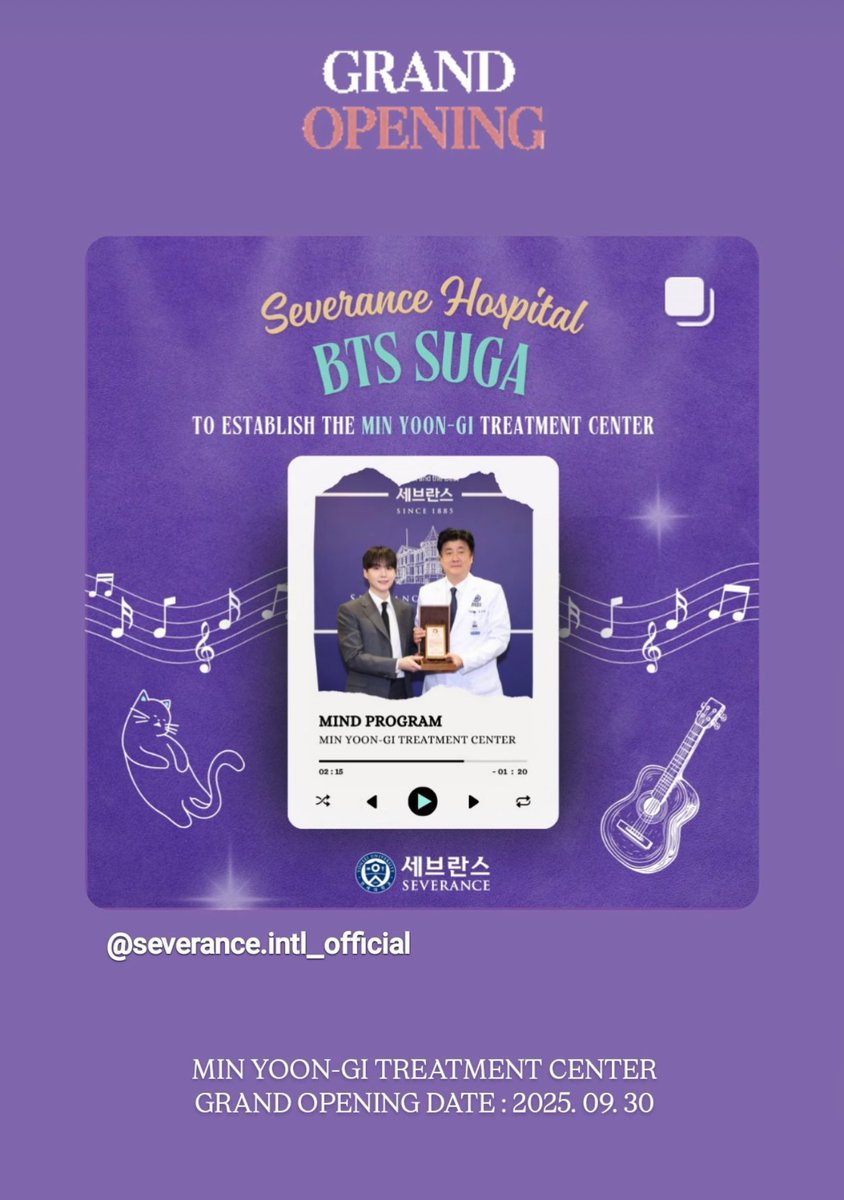
Min Yoongi Treatment Center Opens at Severance Hospital to Support Children with Autism
A New Era of Autism Care in South Korea
On September 21, 2025, a ceremony at Severance Hospital in Seoul marked the announcement of the upcoming official opening of the Min Yoongi Treatment Center for children and adolescents with autism spectrum disorder (ASD). The state-of-the-art facility, funded by a significant private donation, will officially open its doors to patients on September 30, 2025. Hospital representatives, medical professionals, families, and community advocates gathered to witness the unveiling of a commemorative plaque, underscoring the center’s commitment to advancing autism treatment and research in South Korea.
The facility has been designed to provide comprehensive therapies tailored specifically to the developmental, psychological, and social needs of young people on the autism spectrum. Among its treatments will be intensive language therapy, behavioral and psychological interventions, and an innovative range of music-based therapy programs—a unique approach that resonates with the center’s founding mission of healing through communication and expression.
Expanding Options for Autism Treatment
Autism spectrum disorder diagnoses have risen steadily around the world, and South Korea is no exception. According to the Korean Statistical Information Service, the prevalence of ASD diagnoses in the country has increased consistently over the past decade, leading to urgent calls for expanded treatment resources and dedicated medical centers. While South Korea has made strides in early-detection programs and special education, access to specialized therapies remains uneven across regions, often concentrated in metropolitan hubs like Seoul.
The Min Yoongi Treatment Center seeks to bridge this gap by serving as both a treatment hub and a research institution. Experts at Severance Hospital emphasize that the center will not only provide frontline care but also contribute to long-term clinical studies, helping advance global understanding of autism. Language-focused therapies and evidence-based interventions will be central offerings, and families will also be supported with educational programs designed to aid parents and caregivers in strengthening communication and daily living skills at home.
The Role of Music Therapy in Autism Care
One of the defining features of the new center is its integration of music therapy into the core treatment model. Music-based interventions have increasingly been recognized by neuroscientists and psychologists as effective for improving emotional regulation, social interaction, and verbal skills among autistic children. Programs will include one-on-one sessions led by certified therapists, group interaction workshops using music as a medium for collaborative play, and structured listening activities aimed at developing attention and memory.
This approach aligns with an international movement that incorporates creativity into autism treatment. In countries such as the United States and the United Kingdom, music therapy has gained official recognition as a valuable complementary tool. By embedding music into its standard array of treatment options, the Min Yoongi Treatment Center reflects a novel, forward-looking vision of autism care in South Korea.
Historical Context in Autism Support in Korea
The establishment of a dedicated autism center at one of the nation’s most prestigious hospitals represents a culmination of decades of progress. Autism was first formally recognized in Korean medical literature in the mid-20th century, but systemic support lagged for many years. In the 1990s, early intervention efforts began, often spearheaded by community organizations and parent advocacy groups.
Government education policies in the 2000s advanced inclusive schooling opportunities, but many families continued to face significant hurdles, including high out-of-pocket costs and limited access to trained specialists. The Min Yoongi Treatment Center is being hailed as a milestone in this long struggle, providing a modern facility backed by both medical expertise and cultural sensitivity. Many parents present at the ceremony described the announcement as a watershed moment of hope for families who have long struggled to find resources that combine clinical rigor with compassion.
Regional Comparisons and Global Standards
When compared internationally, South Korea has historically trailed behind Western nations in terms of specialized autism treatment facilities. In the United States, for example, large institutions such as the Kennedy Krieger Institute and UCLA’s Center for Autism Research and Treatment have long combined medical services with academic research, setting global benchmarks. Similarly, in Europe, countries like Denmark and the Netherlands have pioneered comprehensive social and healthcare policies that integrate autistic children seamlessly into both education and community life.
Within Asia, Japan and Singapore have also made significant investments in national autism programs, emphasizing early intervention and lifelong support systems. By establishing a center of this scale and specialization, South Korea is positioning itself to become a regional leader in autism treatment and research. What distinguishes the Severance Hospital initiative is its commitment to including music and creative therapies alongside conventional methods, signaling a distinctive contribution to the field.
Economic and Social Impact of the Center
Beyond its medical mission, the new center is expected to generate wide-reaching economic and social benefits. Autism care often places significant financial strain on families, with therapy costs sometimes exceeding average household incomes. By offering comprehensive, hospital-based support services, the Min Yoongi Treatment Center is expected to reduce the burden on parents seeking care across multiple fragmented providers.
From an economic perspective, the creation of dedicated facilities strengthens the healthcare sector by creating specialized jobs for therapists, psychologists, and educators. Investment in advanced therapeutic programs also has a long-term impact on society, as improved treatment outcomes increase opportunities for autistic children to integrate successfully into education and, later, the workforce. Economists have long emphasized that the societal cost of untreated developmental disorders is significantly higher than the upfront investment needed to provide adequate care. The center’s establishment marks both a humanitarian and economically pragmatic initiative.
Public Reaction and Cultural Significance
News of the treatment center has generated strong responses from the public, particularly among caregivers and advocacy groups. Social networks erupted with supportive messages following the announcement on September 21, with many parents emphasizing that the creation of such a facility represents a long-awaited form of recognition for their children’s needs.
The cultural dimension of the center also holds profound significance. Autism has historically carried social stigma in Korea, a factor that has slowed open public conversation. However, the establishment of a center under a prominent name at a leading medical institution sends a powerful message about acceptance, dignity, and investment in the future of children with developmental differences. Advocates hope the visibility of the center will encourage more open dialogue about disability inclusion across Korean society.
Looking Ahead
With the official opening on September 30, the Min Yoongi Treatment Center is poised to become a landmark in South Korea’s evolving healthcare landscape. Early reports suggest that patient demand will far outpace initial capacity, underscoring the urgent need for such specialized services nationwide. Hospital officials have already indicated plans to expand outreach efforts beyond Seoul, with discussions underway about establishing satellite support programs in regional hospitals.
The integration of clinical therapy, family education, and creative approaches like music treatment represents a multifaceted model of care that could serve as a blueprint for future institutions across Asia. As autism continues to draw focus from the global medical community, the Min Yoongi Treatment Center stands as both a local milestone and an international contribution to the advancement of autism understanding and support.
When the doors open on September 30, families will not only enter a new medical facility but also a symbol of progress—one that combines science, compassion, and innovation to create new possibilities for children on the autism spectrum in South Korea and beyond.