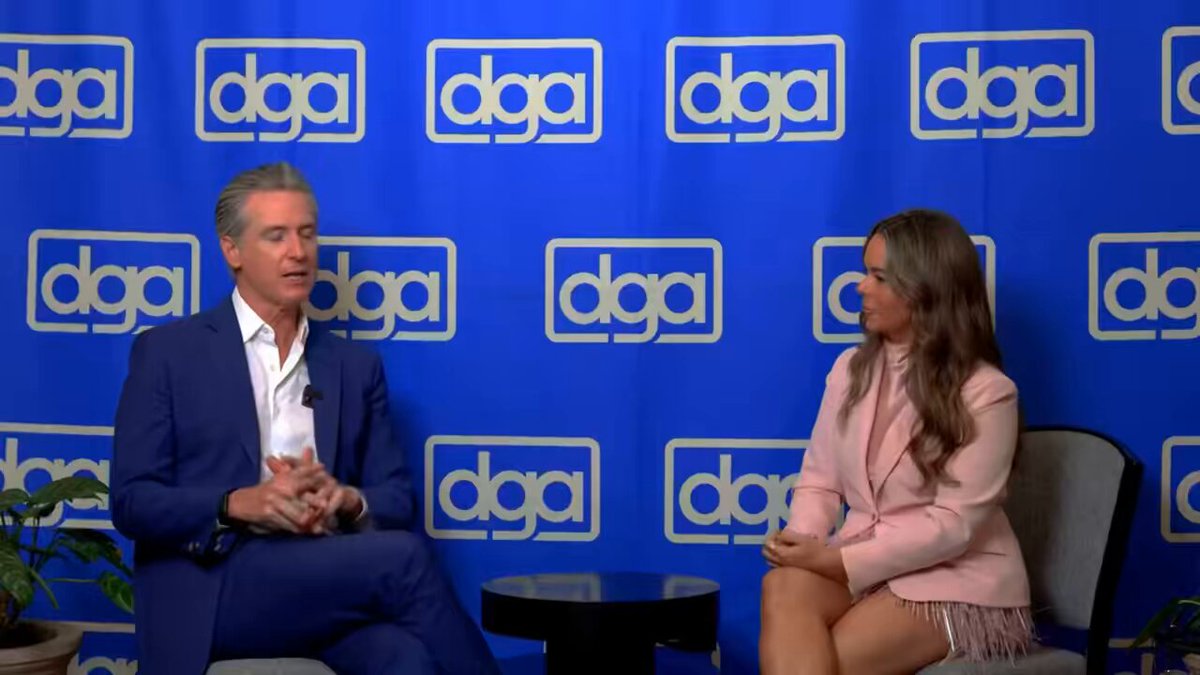
California Governor Newsom Rebukes House Speaker Johnson in Heated Address
A high-stakes political clash between California Governor Gavin Newsom and House Speaker Mike Johnson intensified this week as Newsom characterized Johnson in sharply critical terms during a televised interview. The remarks, delivered amid a broader national debate over leadership and federal policy direction, underscored the deep partisan fault lines shaping American governance at a pivotal moment.
Historical Context and Background
Newsom’s confrontation with Johnson builds on a longer arc of partisan strain that has characterized U.S. politics in the 2020s. California, a state with a history of progressive policy experimentation, has frequently positioned itself as a counterbalance to federal policy directions favored by Republican leadership in Washington. The dynamic intensified during the brief but consequential period when Johnson, a conservative stalwart, assumed the speakership, bringing a different set of priorities to the House agenda. The exchange between Newsom and Johnson is not just a personal volley; it mirrors broader tensions over governance, legislative process, and the pace of policy change in a polarized environment.
Economic Context and Impacts
The rhetoric surrounding Johnson’s leadership has significant economic implications, particularly for policy debates that influence taxation, federal spending, and regulatory frameworks. California, as the nation’s largest state economy, relies on federal funding for a range of programs, including infrastructure, healthcare, disaster relief, and research grants. Shifts in House priorities—such as debates over federal budget levels, debt ceilings, and discretionary appropriations—directly affect California’s struggling and resilient sectors alike, from high-tech industries in Silicon Valley to critical infrastructure projects across the Inland Empire and coastal regions.
Analysts note that heightened political instability at the federal level can affect markets through uncertainty channels, influencing investment decisions, interest rates, and the cost of capital for long-term projects. Conversely, clear, predictable federal policy signals tend to bolster confidence in sectors that are often most sensitive to policy shifts, such as energy, manufacturing, and transportation. Johnson’s stance on spending, regulation, and enforcement has been cited by supporters as a commitment to restraint and fiscal discipline, while critics argue that this approach risks delaying essential investments in infrastructure, climate resilience, and social programs.
Regional Comparisons and Implications
California represents a contrasting regional voice in the national conversation about leadership and policy. While the state has pursued ambitious climate, healthcare, and education initiatives, many other states have pursued different models, leading to a spectrum of policy outcomes across the nation. The current exchange between Newsom and Johnson amplifies regional disparities in fiscal policy, regulatory philosophy, and political culture.
In the Northeast and Midwest, states have emphasized steady investment in infrastructure and workforce development, often leveraging federal programs with strong oversight and accountability measures. Meanwhile, parts of the South have pursued targeted tax policies and deregulation efforts aimed at attracting business investment. The tension between Newsom’s governance approach and Johnson’s fiscal conservatism underscores a broader conversation about how best to balance growth with accountability, resilience, and equity.
Public Reaction and Societal Impact
Public reaction to Newsom’s remarks has been swift and varied. Supporters within California and across several progressive-leaning constituencies have praised the governor’s willingness to confront national leadership and to push back against policies they view as detrimental to the public interest. Critics, including some Republicans and moderates, have framed the exchange as an example of partisan theatrics that distract from substantive governance.
Public sentiment in California— a state accustomed to political activism and civic engagement—often interprets such confrontations through the lens of accountability. Voter turnout, community organizing, and local-level policy initiatives may be influenced by national political dynamics, particularly when high-profile figures engage in sharp partisan exchanges that resonate with or alarm different demographic groups. National media coverage tends to amplify these dynamics, shaping perceptions about leadership, effectiveness, and the direction of federal policy.
Policy Priorities, Outcomes, and Next Steps
Looking forward, the policy landscape will likely be shaped by ongoing negotiations around the federal budget, debt management, and strategic investments in critical sectors such as energy, healthcare, and infrastructure. Newsom’s response to Johnson signals a broader expectation among many California policymakers and voters for sustained attention to climate action, housing affordability, healthcare access, and educational quality, alongside a robust federal support framework to sustain those initiatives.
From a legislative standpoint, a key area of focus will be the interplay between House Republicans and Senate Democrats in shaping the fiscal year 2026 budget. Compromise—or the lack thereof—could influence what projects receive funding, how federal dollars are allocated for disaster relief in climate-affected regions, and how research investments align with long-term strategic goals. The outcome will carry implications for employment, regional competitiveness, and the pace of innovation across the nation.
Historical parallels emerge when looking at past cycles in U.S. governance where high-profile disagreements between executive leadership and congressional leadership produced shifts in policy direction. Those episodes often catalyze changes in coalition-building, messaging strategies, and the tempo of legislative action. Observers note that the current moment could similarly recalibrate how lawmakers approach bipartisanship, negotiation, and the art of governing in an era defined by rapid information flow and heightened public scrutiny.
Interview Details and Quotations
The remarks attributed to Newsom, which frame Johnson in stark terms, have become a focal point of discussion among political analysts and the general public. The quotes reflect a broader rhetorical strategy that prioritizes accountability and direct confrontation over cautious diplomacy. In the fast-paced ecosystem of political communication, soundbites can shape the narrative around leadership effectiveness and the willingness to engage with the opposing party in pursuit of common ground.
Beyond the exchange, stakeholders emphasize the importance of sustained dialogue and practical policy work. While tone matters in shaping public perception, tangible outcomes—such as bipartisan infrastructure deals, healthcare reforms, and climate resilience funding—will ultimately determine the lasting impact of this moment on governance and the national agenda.
Regional Policy Experiments and Lessons
California’s approach to policy testing—ranging from clean energy mandates and climate adaptation to housing reforms and healthcare expansion—offers a living laboratory for evaluating the real-world effects of ambitious public policy. Other states watching these experiments may adopt or adapt similar measures, depending on federal support and state-level capacity. The conversation about leadership and policy direction therefore has implications beyond one state or one party, influencing a broad set of governance choices across the country.
Public Safety and Disaster Preparedness
In a time of increasing weather-related disasters and climate-related risks, federal leadership and funding play a crucial role in supporting state and local resilience efforts. Newsom’s administration has prioritized preparedness and rapid response capabilities, leveraging federal resources for disaster relief, infrastructure hardening, and community mitigation projects. Johnson’s policy framework, which emphasizes restraint and targeted spending, faces scrutiny in the context of ongoing climate risks and the demand for timely, well-funded resilience efforts.
Environmental and Energy Considerations
The intersection of leadership style and environmental policy is particularly salient in this moment. California’s aggressive climate agenda, including investments in renewable energy, grid modernization, and emissions reductions, often requires substantial federal collaboration. Debates over energy policy, subsidies, and regulatory oversight can have ripple effects on energy prices, grid reliability, and regional competitiveness. The outcome of federal leadership debates could influence the pace and scope of clean energy deployment, with consequences for jobs, investment, and environmental health.
Global Perspective and Market Signals
While the focus of this coverage is domestic, global markets watch U.S. policy shifts with keen interest. International investors assess political stability, fiscal discipline, and policy clarity as signals that affect exchange rates, trade relations, and cross-border investment. The tone and direction of U.S. policy can influence global supply chains, particularly in technology, manufacturing, and energy sectors where California-based innovation tends to be a key driver.
Conclusion
The exchange between California Governor Gavin Newsom and House Speaker Mike Johnson is more than a moment of sharp rhetoric. It encapsulates a broader struggle over the direction of U.S. policy, the balance between fiscal restraint and strategic investment, and the capacity of the federal system to respond to rapid economic and environmental changes. As the nation navigates a complex array of challenges—from infrastructure needs and climate resilience to healthcare access and economic growth—the conversations at the nation’s capital will continue to shape lives in California and across the United States.
Public interest remains high as communities monitor federal action, weigh the implications for local economies, and assess the efficacy of leadership under pressure. Observers will be watching for policy outcomes, bipartisan cooperation, and the ability of lawmakers to translate rhetoric into concrete, lasting improvements for workers, families, and businesses. The coming months are likely to reveal how this high-profile clash translates into tangible governance and whether it accelerates progress on long-standing priorities or merely intensifies political theater at a moment of persistent national concern.