Liverpool echoes in a quiet winter night as Manchester United secure decisive lead in Carabao Cup semi-final
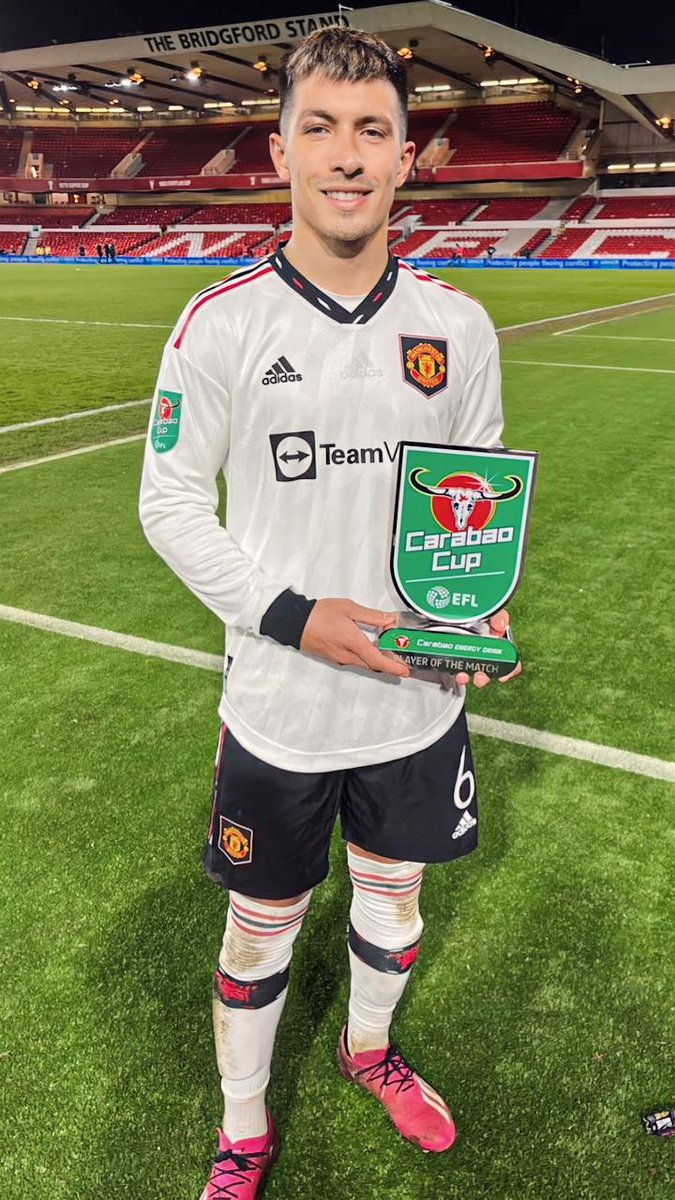
In a match that fused tense, high-stakes defending with swift counterattacks, Manchester United established a commanding 3-0 advantage over Nottingham Forest in the Carabao Cup semi-final first leg at the City Ground. The result sets the stage for a Wembley showdown in the return leg, with Ole Gunnar Solskjær-era resilience and modern tactical precision on full display as United surged to a convincing win behind a standout performance from Lisandro Martinez.
Defensive masterclass under lights
From the opening whistle, United’s defense dictated the tempo, absorbing Forest’s early pressure before striking with clinical efficiency. Lisandro Martinez, the Argentine international and central pillar of United’s rearguard, earned Player of the Match honors for a commanding showing that married aerial dominance with precise ball-playing from the back. His positioning, physical presence, and timely interceptions anchored a back line that frustrated Forest’s forward thrusts while enabling United’s transition game to click. By the final whistle, Martinez’s influence was evident in the numbers and in the mood around the away end, where United’s fans celebrated a performance that blended grit with technical poise.
Forest, meanwhile, faced the challenge of containing a growing United threat that combined rapid counter-attacks with patient build-up through midfield. The home side showed flashes of creativity, but United’s shape and discipline frustrated the hosts, nullifying many of Forest’s momentum swings before they could fully develop. As the match wore on, United grew more confident in possession, leveraging width and the pace of their wingers to stretch Forest and create space for runners from midfield. The result was a 3-0 scoreline that underscores not only the effectiveness of United’s approach on the night but also the daunting task Forest will face in the second leg.
Key moments that shaped the tie
- Early pressure, late execution: Forest began with intent, pressing high and attempting to disrupt United’s passing lanes. United absorbed the early pressure and then exploited spaces behind Forest’s lines, deploying quick distribution from the back to spring counter-attacks that unsettled the home side.
- Martinez’s seal of control: The Argentinian defender delivered a performance that blended precise tackles with composed distribution. His leadership at the back provided a reliable base for United to deploy their forward-thinking game plan.
- Finishing touches: United converted three chances with clinical finishing, turning control into a decisive lead. Each goal reflected not just individual brilliance but a collective understanding of when to press, when to drop, and how to capitalize on transitional moments.
Historical context and the evolution of domestic cup competition
Carabao Cup history has long been a stage where established clubs test depth and cultivate emerging talents. For Manchester United, the competition has often served as a proving ground for squad rotation and strategic planning ahead of the spring campaign. The semi-final stage represents a turning point in a knockout format that rewards resilience and momentum. Historically, the path to Wembley in this competition has been paved by a blend of experienced leadership and younger players rising to the occasion—traits United demonstrated in the City Ground fixture.
The semi-final dynamic also reflects broader shifts in English football’s calendar and competition structure. In recent seasons, clubs have increasingly balanced Premier League demands with domestic cup runs, using the Carabao Cup as both a testing ground for tactical variants and a strategic platform for player development. United’s approach in this match—a mix of robust defensive structure and quick, purposeful transitions—mirrors a growing trend among top clubs to optimize squad utilization without compromising performance in league play or European competition.
Economic impact and implications for both clubs
Cup progress cannot be viewed purely through the lens of matchday revenue; it also carries downstream effects on sponsorship, player development, and season-ticket engagement. For Manchester United, advancing to the Wembley final can amplify commercial visibility and generate additional media interest, which translates into sponsorship activation opportunities and potential broadcast value. The Carabao Cup, while secondary in the pecking order behind the Premier League and continental competitions, remains a meaningful revenue stream and a platform for showcasing talent to a global audience.
For Nottingham Forest, the tie's first leg performance, despite the loss, provided fixture intensity that could bolster matchday attendance and fan engagement as the club continues its rebuilding arc in the top flight. Forest’s squad, comprised of a mix of seasoned veterans and younger prospects, benefited from the pressure-testing environment the semi-final provides, helping to accelerate development and team cohesion ahead of future fixtures.
Regional comparisons and broader context
In a broader regional context, the Carabao Cup semi-finals captivate fans across England and beyond as cities like Nottingham and Manchester deliver high-stakes football that resonates well past the final whistle. The City Ground, a venue steeped in history, often serves as a barometer for a club’s character in knockout football. Comparisons with other Premier League clubs in similar fixtures reveal a common thread: teams that combine disciplined defense with swift, fluid attacking transitions tend to secure the most favorable aggregate outcomes. United’s performance in this match aligns with a broader pattern observed in recent domestic cup campaigns, where teams leveraging strong backline organization and clinical finishing in key moments translate pressure into tangible results.
Tactical analysis: how United balanced defense and attack
The tactical architecture on display combined a compact, disciplined defensive block with a dynamic, versatile attack. United’s backline—anchored by Martinez—maintained shape under pressure, clearing spaces and limiting Forest’s diagonal threats. Midfielders offered screen and tempo control, enabling full-backs to push forward and provide width when the moment allowed. In attack, United exploited the wings and the spaces between the lines to create high-quality goal-scoring opportunities. The balance between safeguarding the lead and pursuing further goals demonstrated a mature strategic approach that can be effective in subsequent legs.
Player-focused notes: Lisandro Martinez and his influence
Martinez’s standout display came down to two critical factors: anticipatory defense and calm distribution. His reads of through balls and his capacity to intercept in high-press situations kept Forest from building sustained pressure in dangerous areas. Offensives through ball progression were rewarded by sharp, accurate passes that opened channels for United’s attackers. His presence on the pitch also provided leadership that helped organize the defense during Forest’s brief bursts of pressure.
Public reaction and fan sentiment
Social media and fan forums reflected a mix of cautious optimism and expectation restoration. United fans celebrated the solid performance and the clean sheet in addition to the three-goal return. Forest supporters, while disappointed by the result, highlighted several bright spots, including moments of creativity from key players and disciplined defensive work that suggested there remains potential for a comeback in the second leg.
What comes next: the second leg and Wembley prospects
The return leg to be played at Old Trafford or at a neutral venue depending on scheduling will determine who advances to Wembley. A 3-0 lead is a substantial advantage, but knockout ties in football have shown time and again that nearly any outcome remains possible across 90 minutes plus potential extra time. United will aim to manage the tie with a measured approach, preserving energy and maintaining defensive solidity while seeking to capitalize on counter-attacking opportunities. Forest, facing a steep uphill battle, must translate home advantage into a high-pressure performance that can turn the tie in their favor, something past campaigns have shown is doable with the right blend of attacking intent and resilience.
Conclusion: a night that underscored systemic strength and emerging depth
The 3-0 victory for Manchester United over Nottingham Forest in the Carabao Cup semi-final first leg was a demonstration of how a club can combine robust defensive discipline with efficient, high-quality finishing to shape a tie in its favor. Lisandro Martinez’s performance encapsulated the night’s mood: disciplined, decisive, and quietly assertive. As the teams prepare for the second leg, the emphasis will be on consistency, tactical flexibility, and maintaining the competitive edge that has defined United’s run in domestic cups in recent seasons. The road to Wembley remains within reach, with United’s defense and attack echoing a broader, enduring imperative in modern football: to balance tradition with the demands of contemporary, fast-paced competition.