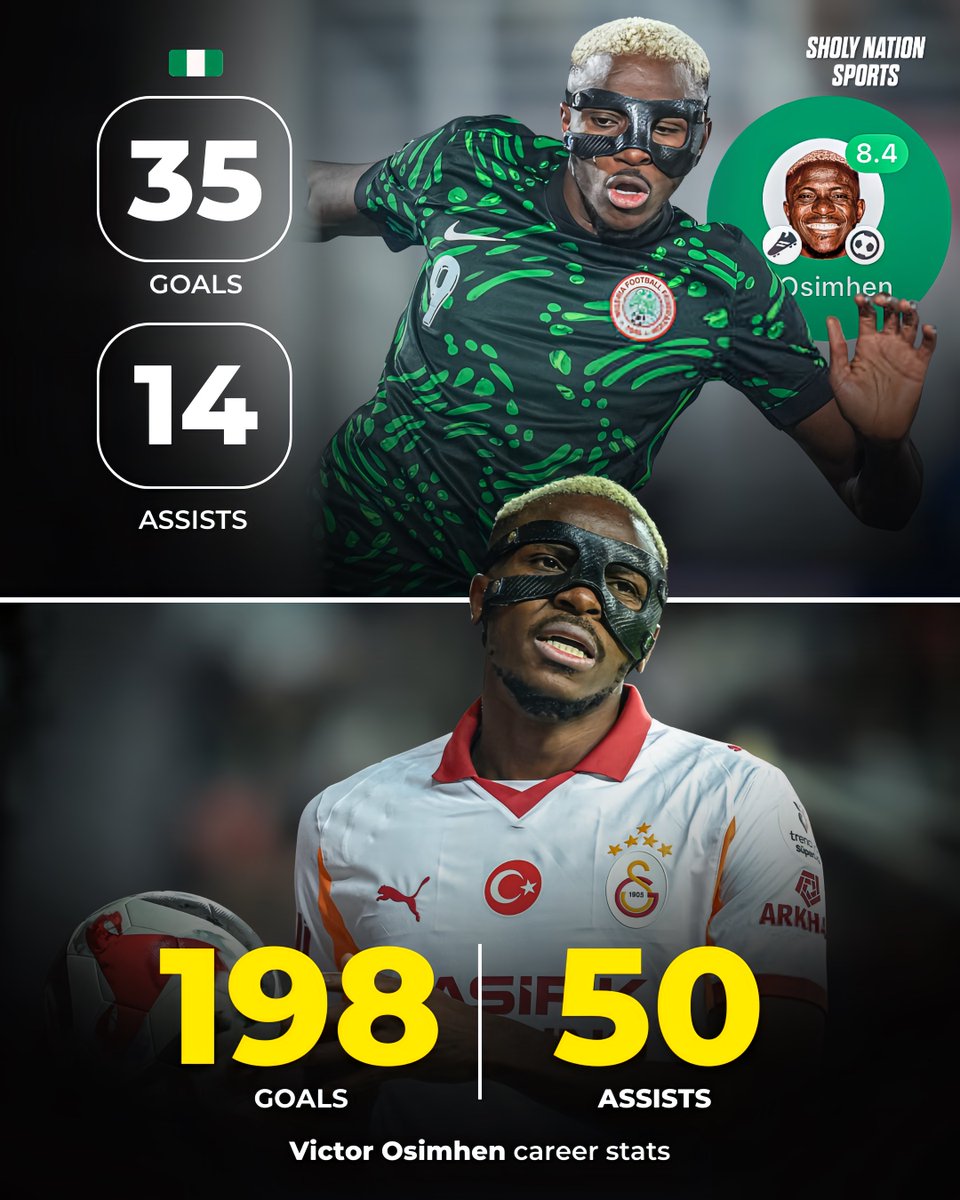
Nigeria’s Striker Victor Osimhen Reaches 35 Goals for Super Eagles as International Career Highlights Shift Global Perceptions
Victor Osimhen’s latest milestone for the Nigeria national team—reaching 35 goals with 14 assists—cements his place among Africa’s most prolific forwards and reinforces a broader narrative about Nigeria’s evolving impact on world football. With an overall career tally of 198 goals and 50 assists, Osimhen’s trajectory offers more than individual achievement; it reflects the enduring development of Nigerian footballing talent, the economics of African players in global markets, and the regional dynamics that shape the sport’s growth.
Historical context: a rising dynasty in Nigerian football Nigeria’s national team, known as the Super Eagles, has long been a powerhouse in African football. Since their first major successes in the late 1980s and 1990s, the program has consistently produced players who excel in top leagues around the world. Osimhen’s emergence as a scoring force aligns with a generation that has benefited from improved youth development pipelines, greater investment in domestic facilities, and a robust network of academies that identify and nurture talent early. His milestone sits within a broader history of Nigerian forwards who have combined pace, technical skill, and a tactical sense for when to strike. As the program has grown more integrated with European leagues and, increasingly, with clubs across Asia and the Americas, the Super Eagles have leveraged a mix of domestic pride and global exposure to remain competitive on the world stage.
Economic impact: transfer markets, sponsorship, and domestic investment For players like Osimhen, international goals translate into broader economic effects—both for the player and for Nigerian football as a whole. A striker who consistently contributes at the international level enhances marketability, leading to more lucrative sponsorships, appearance fees, and negotiated endorsements. This, in turn, can spur investment in domestic academies and infrastructure as clubs seek to emulate the pathways that enable players to reach elite leagues while maintaining ties to their home country. Importantly, a sustained international scoring record can attract attention from leagues with strong commercial ecosystems, potentially accelerating salary growth, performance bonuses, and transfer fees that contribute to the financial health of the sport in Nigeria.
From a regional perspective, Osimhen’s achievements resonate across West Africa, where several national teams monitor the career arcs of standout players in Europe and beyond. The diffusion of Nigerian football’s success has catalyzed broader interest in regional talent, potentially lifting investment in coaching education, youth leagues, and grassroots programs. This regional ripple effect is complemented by the presence of Nigerian diaspora communities, which help create transnational networks for talent development, scouting, and fan engagement. As global audiences increasingly connect with African football narratives, players like Osimhen serve as benchmarks for excellence that can attract sponsorship deals and media rights attention to the region.
Performance analysis: how Osimhen’s numbers translate on the world stage Osimhen’s international tally of 35 goals and 14 assists reflects contributions across multiple appearances and competitions, including friendlies, qualifiers, and continental tournaments. While goal-scoring records are a primary measure of a forward’s impact, the assists tally highlights his broader involvement in build-up play, link-up with teammates, and ability to create scoring opportunities for others. In evaluating his performance, analysts often consider variables such as minutes played, goal timing, and efficiency in high-pressure situations. Osimhen’s combination of pace, physicality, and acceleration can disrupt defenses, while his spatial awareness supports intelligent runs that open spaces for teammates. Across matches against regional rivals and European opponents, his effectiveness is sometimes tested by deeper defensive lines, yet his adaptability and training in top leagues typically yield meaningful contributions.
For the Nigerian program, having a player who can deliver consistent goal returns while contributing assists helps balance strategic plans. Teams can design offensive schemes around his strengths, using him as a focal point for counterattacks or as a conduit for quick transitions from midfield to attack. The presence of a reliable goalscorer also helps reduce the burden on a single striker, enabling coaches to deploy varied tactical setups that keep opponents guessing. In the broader context of international football, Osimhen’s numbers compare favorably with forwards who operate in similarly demanding schedules, illustrating both personal consistency and the program’s capacity to compete at multiple levels of competition.
Global comparisons: where Osimhen sits among peers When placed against contemporary international forwards with similar responsibilities, Osimhen’s statistics reflect a blend of durability and potency. Compared to players who frequently feature in European top leagues and national teams with high competitive demands, his output demonstrates that Nigerian players can sustain elite-level performance while maintaining allegiance to their national program. The balance of goals and assists is particularly notable, signaling a forward who doesn’t rely solely on finishing prowess but also on facilitating chances for teammates. This dual capability is valuable for teams that prioritize dynamic attacking play and fluid formations, as it allows for varied in-game adaptations without sacrificing productivity.
Regional and continental context also matters. On the African continent, Osimhen’s production sits among the leaders, contributing to Nigeria’s ongoing role as a central figure in African football. His success echoes the importance of investing in player development and creating pathways that allow African talents to thrive abroad while remaining connected to national duties. This connectivity between club success and international performance sustains a positive feedback loop: strong domestic programs attract top talent, which in turn elevates the national team’s outcomes and regional prestige.
Public reaction and cultural significance Osimhen’s milestone has drawn attention from fans, analysts, and policymakers in Nigeria and beyond. For supporters, his record embodies pride in national heritage and the Afro-Football narrative that highlights resilience, athleticism, and opportunity. Public reaction often emphasizes the inspirational potential for younger players—a reminder that domestic programs can produce world-class talent and that international exposure can catalyze economic opportunities for families and communities. Media coverage tends to celebrate not only the raw numbers but also the stories behind the journey: breakout seasons, injuries overcome, and the perseverance required to compete at the highest levels.
Sustainability and the road ahead Looking forward, sustaining high performance for Osimhen and the Super Eagles hinges on several factors. First, continued access to high-level competition—whether through domestic leagues, European football, or international friendlies—remains essential for development and visibility. Second, strategic investments in injury prevention, conditioning, and recovery protocols help maximize longevity in a demanding schedule that includes club and country commitments. Third, partnerships with youth development programs and scouting networks can diversify the talent pipeline, ensuring the national team remains competitive as veteran players transition toward later career stages. Finally, a stable ecosystem that supports transfer negotiations, contract stability, and financial literacy for players can enhance long-term outcomes for both individuals and the national program.
Regional comparisons highlight how Nigeria’s football ecosystem stacks up against peers in West Africa and beyond. Countries with similar talent pools often vary in their infrastructure, investment, and exposure to global markets. Nigeria’s advantage has long been its expansive football culture, large population base, and willingness of clubs to engage with international markets. If these strengths are preserved and amplified through policy, sponsorship, and continued youth investment, Osimhen’s legacy could extend beyond records to catalyze broader improvements in Nigerian football governance and development.
Conclusion: a milestone that reflects momentum, not final destination Osimhen’s achievement of 35 international goals and 14 assists, set against a career tally of 198 goals and 50 assists, marks a pivotal moment for Nigerian football. It underscores the importance of sustained talent development, economic opportunities tied to international performance, and the regional dynamics that shape how African players influence the global game. As the Super Eagles navigate future qualifiers and potential continental tournaments, the trajectory suggests not just individual glory, but a broader testament to Nigeria’s enduring role in international football. Public interest is likely to remain high as fans look for continued contributions at the highest levels and as the football economy absorbs the implications of such milestones.