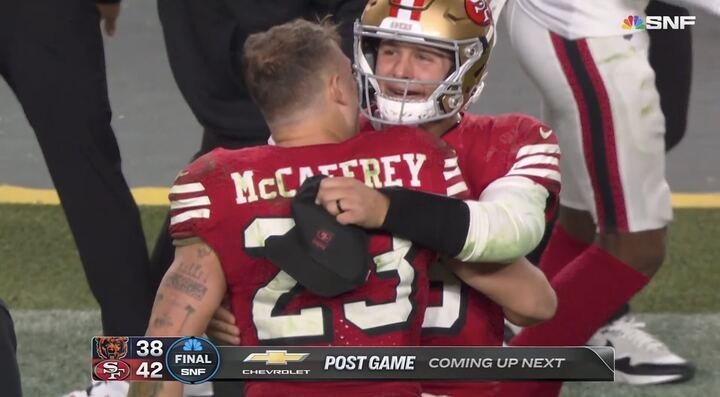
San Francisco 49ers Clinch 12-4 Orbit Amid Storm of Injuries
In a season defined by adversity, the San Francisco 49ers have carved out a 12-4 record and positioned themselves as serious contenders for the top playoff seed. The journey has been marked by a cascade of injuries that tested depth, resilience, and the franchise’s ability to maintain a high level of performance across offense and defense. As the calendar turns toward postseason play, the Niners stand as a case study in how a team can absorb unprecedented disruptions and still stay on course for meaningful contention.
Historical context: a franchise built on resilience and depth The 49ers’ current arc sits within a broader historical frame. Since their dynasty years of the late 1980s and early 1990s, San Francisco has consistently prioritized organizational depth, strategic adaptability, and player development. The 2020s have amplified that approach as the league’s attrition rate—driven by year-round conditioning demands and the physical toll of a modern NFL schedule—has forced teams to lean on depth players and versatile schemes sooner than ever. The 49ers’ 12-4 finish echoes a tradition in which front offices design rosters not only for peak weeks but for a sustained grind spanning 17 regular-season games and the unforgiving playoffs that follow.
Injury landscape and impact on the roster The season unfolded with a notable string of injuries at critical positions, testing the team’s capacity to compensate without compromising on execution and identity.
- Linebacker Fred Warner: An anchor of the defense, Warner’s ankle injury sidelined him for the regular season. His absence forced defensive coordinators to recalibrate communications, alignments, and leverages across the second level. The challenge was less about one player and more about preserving the defense’s tempo, discipline, and tackle consistency. The coaching staff emphasized rotation and scheme adjustments to maintain run defense and pass coverage integrity.
- Defensive end Nick Bosa: A cornerstone pass rusher, Bosa suffered a torn ACL, a blow to the team’s edge pressure and overall pass rush philosophy. Bosa’s absence tested the roster’s ability to generate pressure with stunts, schemes, and other pass rushers stepping into amplified roles. The defense had to rely more on late-season schematics and collective effort rather than a single dominant contributor.
- Quarterback Brock Purdy: Turf toe forced Purdy to miss six weeks, interrupting continuity in the offensive rhythm and timing with skill-position groups. The quarterback’s absence required a careful balancing act between preserving play design and adapting to the strengths of backup signal-callers. When Purdy returned, the offense had to re-establish rhythm and confidence in high-percentage throws, bootlegs, and play-action sequences that define the team’s passing identity.
- Wide receiver Ricky Pearsall: A PCL injury sidelined Pearsall for seven games, removing a dynamic element from the receiving corps. The position group faced reallocations in routes, targets, and third-down conversions, testing the depth and reliability of other targets within the offense.
- Tight end George Kittle: Kittle’s four-week absence plus a recent missed game represented a hurdle for the tight end position’s blocking and mismatch potential in the passing game. The offense adjusted via personnel rotations, route concepts, and blocking schemes to preserve the availability of play-action opportunities and downfield throws.
- Wide receiver Brandon Aiyuk: Aiyuk’s absence from active play for portions of the season temporarily impacted the team’s top-tier target consistency and explosive plays. The coaching staff leaned on other receivers to maintain spacing, leverage, and contested-catch opportunities, while Aiyuk’s eventual return served as a catalyst for a more complete aerial attack.
Strategic responses: depth, adaptability, and schematic resilience Facing a landscape of injuries that would challenge many franchises, the 49ers leaned into several strategic pillars:
- Depth development: The organization’s off-season and mid-season practices emphasized depth at every position. By cultivating a pipeline of versatile players who can slot into multiple roles, the coaching staff could deploy wave-after-wave substitutions without a dramatic drop in execution. This approach compensated for the loss of star players and kept the team competitive in every phase of the game.
- Flexible game plans: Offensive and defensive coordinators emphasized adaptable game plans that could morph based on personnel availability. This flexibility extended to play-calling tendencies, with a willingness to lean on run-first concepts when the passing game was temporarily stunted and to lean on quick passes and misdirection when protection was stressed.
- Injury-aware player utilization: Managers tracked workloads, snap counts, and recovery timelines to minimize the risk of re-injury. This careful stewardship ensured that key players who did return from injuries could contribute effectively without being forced back too soon.
- Maintenance of identity: Despite personnel churn, the 49ers maintained core aspects of their identity—physical run game, precise blocking schemes, and an aggressive, multi-front defense. This continuity helped players regain familiarity quickly once healthy and ensured that the team could sustain momentum even during midseason adversity.
Economic and competitive impact From a broader perspective, the injury-riddled season has tangible implications for the franchise’s business and competitive outlook.
- Economic stability and ticketing: The team’s marketing narrative centered on resilience and depth. A 12-4 record, despite injuries, reinforces the brand of durability and high-performance culture, contributing to sustained fan engagement, premium seating demand, and merchandising momentum. When teams demonstrate resilience, they tend to retain sponsorship interest and attract consistent broadcast attention, essential in the NFL’s highly lucrative ecosystem.
- Salary-cap management and player valuation: The proportional impact of injuries on cap space is an ongoing factor for a franchise. While some players may be on contracts with guaranteed money that remains pertinent, the performance of the remaining roster can influence future extensions and negotiation leverage. The organization’s ability to maximize value from backups and mid-tier contributors can shape the economics of the roster over the next several seasons.
- Draft positioning and future planning: Robust performance with a depleted depth chart can influence perceptions about the team’s long-term strategy. If edge-rushing talent, secondary depth, or receiver development continues to prove fruitful in subsequent drafts, it reinforces a blueprint that prioritizes versatile players who can fill multiple roles in multiple schemes.
Regional comparisons: performance and resilience across the conference A look at comparable teams within the conference highlights how injuries shape outcomes and competitive dynamics.
- Competitors with deep rosters: Teams that emphasize depth across skill positions and multiple defensive fronts tend to weather injuries with less performance decline. In recent seasons, such rosters have demonstrated a reliable baseline of play, allowing them to stay in the postseason hunt even when star players are sidelined.
- Pitch-perfect efficiency: Clubs that rely on efficient quarterback play, precise blocking, and a balanced run-pass ratio can maintain offensive output despite personnel shifts. The 49ers’ emphasis on a strong running game and high-percentage passing aligns with this model, enabling a smoother transition when a starter is unavailable.
- Regional market effects: The Bay Area market, with its robust media presence and national interest in the team’s storylines, amplifies coverage of injuries and roster changes. While this attention can add pressure, it also reinforces the franchise’s strategic emphasis on performance, development, and fan engagement during trying times.
Postseason trajectory and expectations With a 12-4 record, the 49ers have positioned themselves for a favorable playoff path, though health status and opponent scouting will play pivotal roles in outcomes.
- Playoff seed implications: Achieving the top seed requires not only continued wins but also healthy rosters down the stretch. The coaching staff will likely balance the need to secure home-field advantage with the imperative to preserve the health of returning players and reduce risk in late-season games.
- Matchup considerations: The team’s blend of a potent run game, the offense’s timing concepts, and a defensive scheme that emphasizes pressure and discipline presents challenges for opponents across different specialties. Teams facing the 49ers must account for both the physicality of the run game and the complexities of their play-action passing attack.
- Player availability down the stretch: The return timeline for key players who missed time will influence tactical decisions. If core contributors rejoin the lineup with demonstrated conditioning, the offense and defense can return to full strength and peak performance levels for the playoffs.
Public reaction and cultural resonance The season’s arc has sparked a range of public reactions, from heightened fan optimism to analysis of roster construction. Fans often respond to narratives of resilience—teams overcoming injuries to sustain success—by increasing engagement through social media, highlight reels, and community events. The broader public appreciation for a team that demonstrates grit can influence the franchise’s cultural footprint beyond the gridiron, reinforcing a sense of local pride and shared identity.
Statistical snapshot and performance indicators While the injuries blurred certain statistical narratives, the team maintained competitive efficiency across major metrics.
- Offensive efficiency: The offense continued to generate productive gains through a balanced mix of rushing attempts and passing plays, leveraging play-action and boot concepts to create high-percentage throws when protection allowed.
- Defensive resilience: Even with Bosa sidelined, the defense’s performance metrics reflected a commitment to pressure, tackling discipline, and red-zone stoutness. The absence of a single star did not translate into a collapse, underscoring the group’s depth and cohesion.
- Special teams and field position: Special teams contributed critical field-position advantages, complementing the offense and defense. In a season where every phase matters, disciplined coverage, reliable returns, and effective kick- and punt-management added to the team’s overall success.
Conclusion: a season defined by adaptability and onward momentum The 12-4 record, achieved amid a wave of injuries and lineup churn, underscores the 49ers’ organizational strength. The franchise’s ability to preserve core identity while leveraging depth, adjusting schemes, and maintaining competitive tempo has been the defining feature of the campaign. As the postseason approaches, the team’s resilience serves as a narrative of sustained performance in the face of adversity. The question moving forward is not only about the potential to secure a top seed but also about how the roster will remain cohesive and healthy during the playoff push.
If you’d like, I can tailor this piece further for a specific publication format or add more granular game-by-game notes, including pivotal moments, key injuries by week, and player-by-player performance excerpts to deepen the historical context and regional comparisons.