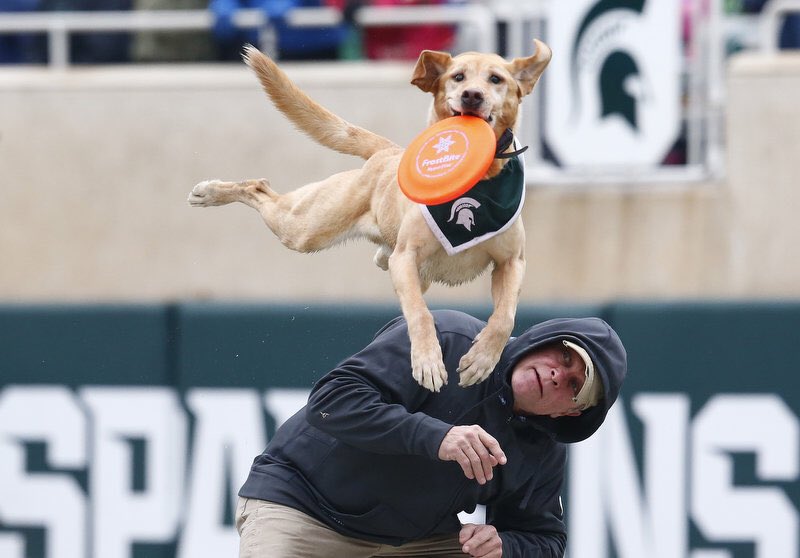
Zeke the Wonder Dog: A Chronicle of Michigan State University’s Beloved Frisbee Legend and His Enduring Impact
In the quiet glare of January 1, 2026, East Lansing marked a moment of reflection for a figure who transcended college sports culture: Zeke the Wonder Dog, the yellow Labrador whose feats during Spartan football halftime shows became a defining memory for generations of fans, alumni, and students. While Zeke departed this world in 2016, his legacy continues to reverberate through the university’s traditions, the broader landscape of college athletics, and the communities that rally around MSU’s green-and-white banner. This article revisits Zeke’s story, places it in historical context, and analyzes the lasting economic and cultural imprint of canine performers in collegiate sports.
Historical Context: From Mascots to Memory, with a Frisbee in Tow Zeke’s rise to fame unfolded during a period when college football halftime entertainment was increasingly seen as an extension of athletic identity. The MSU Spartans have long leveraged pageantry and athletic ceremony to cultivate school spirit, dating back to the early 20th century when marching bands, drumlines, and mascots became household names across campuses. Zeke joined this lineage as a non-human performer whose athleticism blurred the lines between sport and spectacle. His signature moment—the high-flying catch of a Frisbee, sometimes off a handler’s toss, often against a display of precision timing—captured a universal appeal: athletic grace, playful competition, and the charisma that resonates with fans of all ages.
Zeke’s place in MSU lore was formalized with a football letter, an unusual accolade for a canine. While letters traditionally recognize the contributions of players who compete on the field, Zeke’s recognition reflected a broader understanding of how tradition, engagement, and morale contribute to the program’s identity. The gesture underscored a philosophy at many universities: athletes and performers who support the game—whether on the field, in the stands, or in the mascot realm—play a vital role in creating memorable experiences that can endure long after the final whistle.
Economic and Brand Implications: The Value of Tradition in College Sports Beyond the emotional resonance, Zeke’s legacy intersected with tangible economic and branding effects typical of enduring college rituals. Mascots and legendary performers function as consistent touchpoints for fan engagement, alumni outreach, and cross-promotional opportunities. For a program like Michigan State University, which competes in a revenue-rich landscape of college athletics, the ability to sustain high attendance, merchandise sales, and media interest depends in part on a sense of continuity and shared memory. Moments associated with Zeke provided a touchstone for branding efforts—an authentic, heartwarming story that humanizes a storied institution while preserving the aura of competitiveness that defines Spartans football.
The broader economic landscape of college sports has evolved, with media rights, sponsorships, and live-event monetization shaping program budgets and strategic decisions. Traditions that endure—whether a historic rivalries’ cadence, a marching band spectacle, or a beloved animal performer—can influence ticket demand, donor activity, and tourism for campus events. Zeke’s memory contributes to that ecosystem by enriching the narrative around Spartans football, deepening fan loyalty, and strengthening the cultural capital of MSU as a university with a rich tapestry of lore.
Regional Comparisons: A Pan-College Look at Canine and Mascot Legacies Across the Big Ten and other major conferences, universities cultivate distinctive mascots and performance legends that echo Zeke’s blend of athletic flair and family-friendly appeal. For example, several programs maintain mascots or canine performers who become symbols of the school’s character and values, while others emphasize traditional human athletes and coaches. The MSU example demonstrates how a canine performer can achieve a lasting place in campus memory without compromising the seriousness of the sport, balancing entertainment and competition in a way that broadens the program’s reach.
Regional comparisons reveal both shared patterns and unique twists. In some campuses, canine performers are integral to game-day rituals, appearing in pregame routines, halftime shows, and promotional campaigns. In others, mascots function primarily as symbols of school pride with limited on-field roles. Zeke’s distinguished legacy—his recognition with a football letter and his enduring status in alumni memory—illustrates how a performer can become a cultural touchstone that extends beyond a single season.
Cultural and Social Impact: Aesthetic and Narrative Power The cultural resonance of Zeke’s story lies in its ability to weave athletic achievement with universal themes: perseverance, joy, and communal celebration. The image of a yellow Labrador leaping to snatch a Frisbee—often captured against the crowd’s sea of green and white—serves as a vivid metaphor for the aspirational moment: skill meeting opportunity, effort meeting chance, and a community united in shared awe. This narrative fuel can energize alumni networks, inspire younger generations to engage with university life, and foster a sense of belonging that transcends the scoreboard.
Public reaction to Zeke’s legacy remains a touchstone for how communities remember their past while looking toward the future. For many MSU supporters, Zeke embodies a particular era of the program—one defined by simpler, joyful moments that nevertheless carry enduring significance. As campuses seek to maintain relevance in a crowded sports marketplace, stories like Zeke’s offer a template for preserving heritage while inviting new fans to participate in the ongoing journey of the university.
Sporting Tradition and Modernization: Lessons for Today Zeke’s story offers lessons for contemporary college sports programs navigating modernization pressures, including digital engagement, athlete welfare, and the commercialization of game-day experiences. First, traditions anchored in authentic, family-friendly entertainment can co-exist with high-performance athletics. Second, recognizing contributions beyond the perceived core athletes—such as performers who enrich the fan experience—can enhance program morale and donor engagement. Third, memorable narratives anchored in a university’s lore can be leveraged across channels: social media, fan events, and legacy campaigns, all while reinforcing a consistent brand voice.
In practice, this means curricula for fan engagement that emphasize humane treatment of animal performers, transparent risk management, and high standards of care. It also means mindful storytelling that honors the memory of figures like Zeke while ensuring contemporary audiences understand the broader context of collegiate athletics—its community-centric roots and its evolving economic realities.
Legacy Beyond the Field: Zeke’s Indelible Footprint Although Zeke’s active performances ended years before 2026, his impact persists in the quiet traditions that define the Spartans’ home games. Memorials, alumni anecdotes, and the ongoing retellings of his catches contribute to a living memory that strengthens the university’s identity. The symbolism of a well-loved canine athlete endures in the way fans describe MSU’s culture: collaborative, spirited, and deeply rooted in a sense of shared experience.
This enduring memory also serves as a reminder of the broader role that human-animal partnerships play in sports culture. From service animals assisting athletes to mascots embodying a school’s ethos, the relationship between people, animals, and competition remains a meaningful facet of how communities celebrate achievement and perseverance. Zeke’s place in that spectrum underscores the power of a single, well-executed moment to become a lasting emblem of a university’s character.
Looking Ahead: Preserving Heritage While Embracing Change As Michigan State University continues to evolve, preserving the elements that foster a sense of history and continuity will remain central to its strategic approach. Zeke’s story provides a blueprint for how universities can honor past luminaries while adapting to modern expectations around inclusivity, safety, and digital storytelling. By keeping the memory of Zeke alive through respectful tribute, archival materials, and thoughtful storytelling, the MSU community can maintain a strong emotional tether to its roots while welcoming new generations of fans and students.
Conclusion: A Legacy Written in Green and White Zeke the Wonder Dog’s legacy is not merely a footnote in Spartan history; it is a living thread that runs through MSU’s culture and its approach to athletics, tradition, and community. The moments when a yellow Labrador defies gravity to retrieve a Frisbee have become a symbol of the exuberance and communal joy that sports can inspire. In the broader arc of college athletics, Zeke’s memory reminds us that success is not measured solely by wins and losses but by the enduring stories that bind supporters to a university’s mission, its people, and its shared future. As alumni gather, as fans reminisce, and as new generations learn of Spartan pride, Zeke’s spirit—cheerful, fearless, and unmistakably MSU—continues to leap into the annals of college sports history.